The kitchen is filled with the sharp, aggressive hiss of a cold salmon fillet hitting a hot pan. For a fleeting moment, everything sounds perfect. You step back, wipe your hands on a towel, and wait for a beautiful, golden crust to develop. But when you finally slide the spatula underneath to check the progress, you feel a stubborn, heavy resistance. A sinking feeling settles in your chest.
You know the exact feeling of panic as the metal catches, tearing the delicate silver skin and leaving behind a jagged, crusted mess welded to the bottom. You scrape a little harder, watching your expensive dinner disintegrate into a pale, mangled disaster. Frustrated and defeated, you immediately blame the pan, vowing to buy another cheap non-stick skillet the next time you go to the store.
Stainless steel has a harsh reputation in home kitchens for being ruthless and unforgiving. But the metal itself is not the enemy here; the issue lies in your sequence of movements. The precise way you bridge the gap between cold steel and raw protein determines everything that happens next. It is a matter of basic physics masquerading as a culinary mystery.
Most home cooks instinctively reach for the oil bottle before the burner even clicks into action, pouring a thick, cold puddle of fat straight into a cold pan. They assume that coating the surface early is the only way to prevent food from sticking. That split-second, seemingly harmless habit is exactly why your dinners constantly break apart and fail.
The Microscopic Mountain Range
To understand why your food is tearing, you have to change how you look at your cookware. A heavy stainless steel pan feels perfectly smooth under your fingertips, but if you were to view that surface under a powerful microscope, it would look like a rugged, jagged mountain range of sharp peaks and deep valleys. Think of the pan’s surface as a highly dense, porous sponge made entirely of iron and chromium.
If you pour cold oil into a cold pan, that liquid simply sinks down into those metallic crevices and sits there, completely static. As the pan slowly heats up, the raw protein you drop in sinks past the oil and acts like a permanent liquid glue, actively seeping into the expanding pores of the warming metal. By the time the pan is hot enough to cook, the food and the steel have physically bonded together.
The secret is disrupting this routine entirely. You must heat the bone-dry metal first, with absolutely nothing in the pan. As the steel warms, those microscopic jagged peaks and valleys expand, shift, and eventually stabilize into a much tighter surface. When you finally add your oil to the hot, sealed metal, it cannot sink. Instead, it instantly glides over the top, creating a microscopic vapor barrier. Your food literally floats on this invisible layer of steam and fat, never truly touching the metal below.
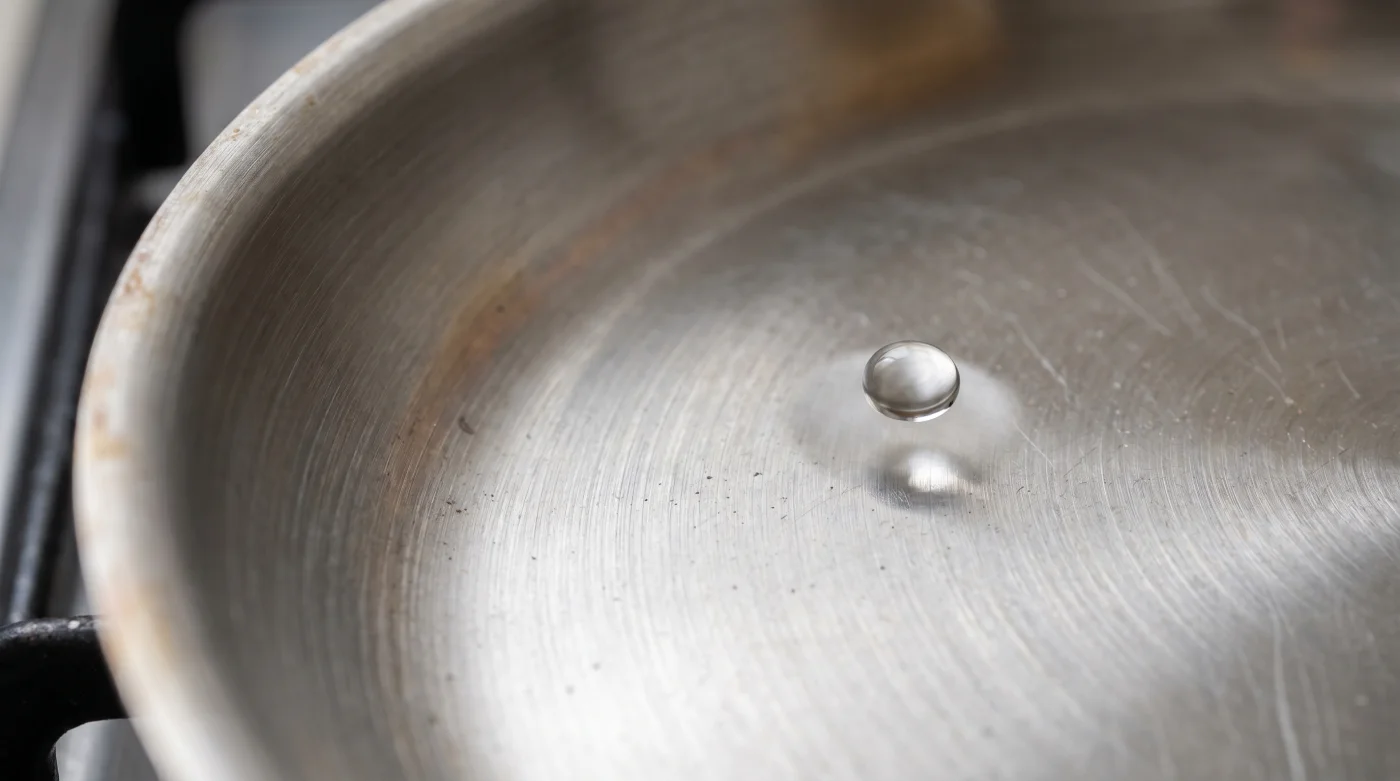
Elias Vance, a 42-year-old line cook who spent a grueling decade working the fish station at a busy Chicago brasserie, calls this process the “water dance.” He spent years watching fresh culinary graduates ruin thousands of dollars worth of halibut simply because they rushed the oil. Elias taught his entire line a remarkably simple trick: heat the dry steel until a single drop of tap water does not sizzle or evaporate, but instead forms a perfect, rolling bead that skates endlessly across the pan like a glass marble. Only when you see that marble does the oil go in.
- Microwave Ovens Actually Cook Faster When Placed Away From Kitchen Walls
- Inter Miami Matches Abruptly Block Screen Mirroring Across Streaming Platforms
- TVMAX En Vivo Broadcasters Just Shifted Premium Matches To Paid Tiers
- Pasta Water Ruins Tomato Sauces Without This Crucial Emulsion Step
- Windshield Wipers Scratch Glass Constantly Without This Isopropyl Alcohol Wipe
- HEPA Vacuum Filters Spread Dust Instantly If Washed With Water
- Salary Negotiations Fail Instantly When You Reveal Your Current Income
- Retinol Serums Destroy Skin Barriers When Applied Over Daily Moisturizer
- Bluetooth Headphones Drain Your Phone Battery Through Background Proximity Polling
- Electric Vehicle Tires Degrade Faster Using Maximum Regenerative Braking Settings
Tailoring the Temperature
Different foods react uniquely to this vapor barrier, meaning you must slightly adjust your approach depending on what you plan to cook. The physics remain the same, but the timing shifts.
For delicate swimmers like fish fillets and scallops, the margin for error is non-existent. Because their muscle fibers are incredibly short and fragile, cooking them demands a flawless physical barrier between the flesh and the steel. You must bring the dry pan to that exact rolling-bead stage, followed by an immediate coat of high-heat oil. The moment the oil ripples, the seafood gently lays down away from you.
Morning routines involving eggs require a softer touch. Eggs are mostly composed of water and delicate proteins, meaning they will aggressively seek out any open, unsealed pores in the metal. You actually want a slightly lower temperature than you would use to sear a steak, but the dry-pan-first rule remains absolute. If the water bead slowly glides rather than racing frantically around the pan, you have found the sweet spot for eggs.
When handling heavy hitters like thick steaks and pork chops, the rules shift toward pure power. Beef can take a beating, but leaving a beautiful, savory crust stuck to the bottom of the pan locks the flavor away from the meat and ruins the presentation. Here, the dry heating sequence ensures a violent, immediate sear that shocks the exterior of the meat, locking the crust to the protein itself rather than allowing it to bind to the steel.
The Sequence of Gliding
Stop rushing the burner and treating dinner like a chore you need to speed through. This process requires a brief moment of presence and observation. You are orchestrating a physical reaction between heat, metal, and fat.
Keep your hands empty for the first few minutes. It requires discipline to leave the heavy oil bottle sitting idle on the kitchen counter while the metal slowly wakes up, but this patience is exactly what separates professional results from domestic frustrations.
- Set your burner to a steady medium heat; never blast an empty stainless steel pan on maximum heat to save time.
- Wait exactly two to three minutes, allowing the dry steel to warm through evenly from edge to edge.
- Flick a single, small drop of water into the dead center of the pan. If it violently boils away into steam, you must wait longer.
- When that single water bead pulls itself together and skitters across the surface like a hockey puck, the metal’s pores are sealed shut.
- Quickly wipe the water out with a towel, pour in your oil, swirl it to coat the bottom, and wait ten seconds before gently lowering your protein in.
When the food finally makes contact, it should land with a confident, steady hiss, not a dull, soggy sizzle. You will notice immediately that you can gently shake the pan and the food will slide freely.
Beyond the Searing
Mastering this remarkably simple sequence fundamentally changes your daily relationship with your kitchen. You can finally stop participating in the endless cycle of buying cheap, chemically coated pans that scratch, flake, and inevitably degrade into the trash every eight months.
Instead, you begin to trust the heavy, honest weight of quality stainless steel. Cooking stops being a stressful gamble against sticking, tearing, and burning. It transforms into a quiet, predictable rhythm of temperature and timing, giving you back total control over the food you carefully prepare for yourself and your family.
The pan will release the food when it is entirely ready, but only if you prepared the surface to catch it in the first place.
| The Habit | The Physical Reaction | The Result for You |
|---|---|---|
| Pouring cold oil immediately | Oil sinks into static metal pores | Food welds to the pan |
| Heating the pan bone-dry | Metal expands and pores seal tight | Natural non-stick surface is formed |
| Adding oil to hot steel | Oil creates a microscopic vapor barrier | Proteins glide and sear perfectly |
Frequently Asked Questions
Why does my food still stick even if I heat the pan? You likely did not wait quite long enough for the water bead test to succeed, or your heat was far too low to cause the metal to expand and seal properly.
Can I use butter instead of cooking oil? Butter contains water and milk solids which burn rapidly at high temperatures. It is best to use a high-heat oil for the initial vapor barrier, then add butter later for finishing flavor.
How do I clean a stainless steel pan if I made a mistake? Boil a small amount of water with baking soda directly in the pan, let it simmer gently, and use a wooden spoon to slowly lift away the burned residue without scratching the steel.
Does this dry-heating trick work for cast iron too? Cast iron relies on a semi-permanent baked-on seasoning layer rather than a temporary vapor barrier, though proper pre-heating remains vital for both materials.
Is it safe to heat a completely empty pan? Yes, on a medium or medium-low heat for a few minutes. You should never leave an empty pan blasting on high heat, as extreme, rapid temperature changes can permanently warp the metal.