The hot water from the shower finally turns cold, and the steam hanging against the bathroom mirror begins to clear. You reach for a plush towel, pressing it gently against your face to leave a fragile layer of moisture behind. For years, the morning shows and beauty counters have repeated the same golden rule of hydration: always apply your serums and creams while the canvas is damp. It feels intuitive, like watering a plant that is already softened from the rain.
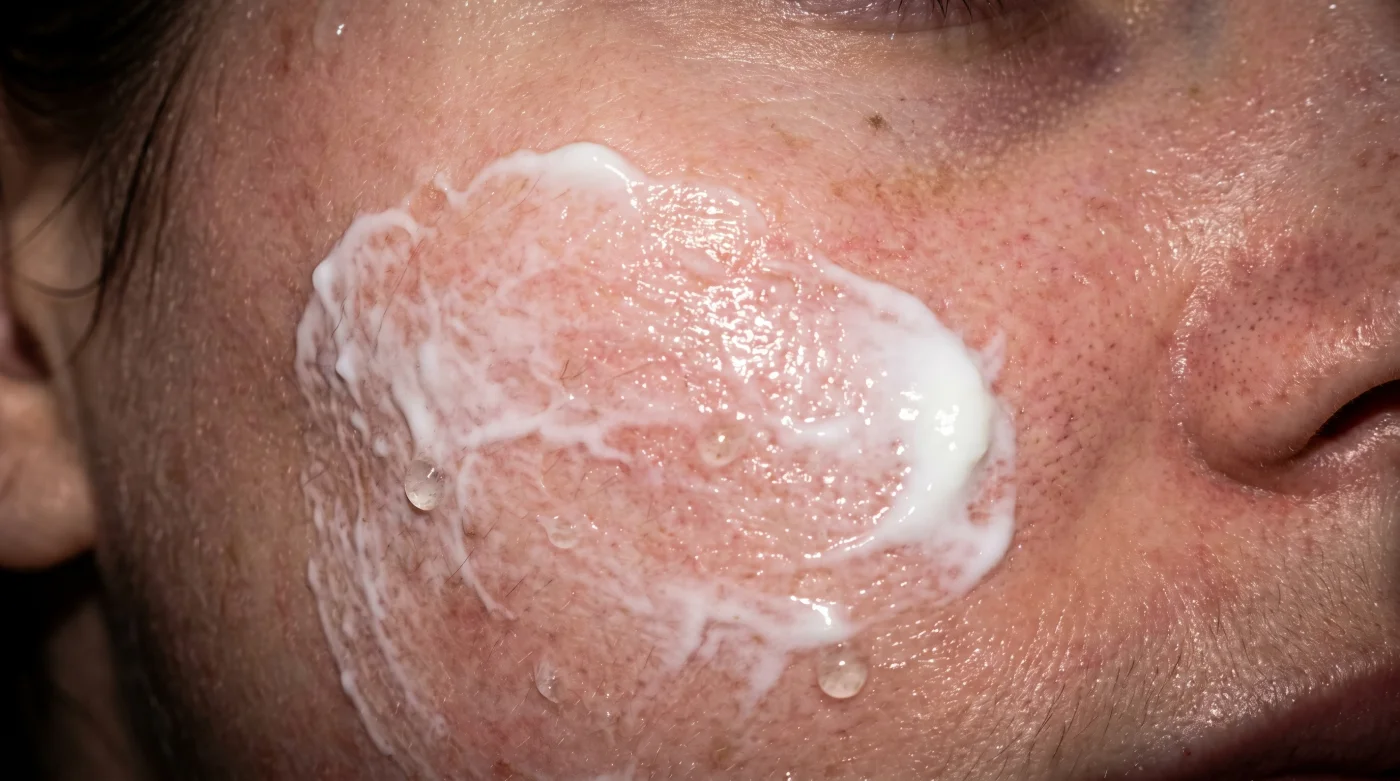
But when you reach for that specific frosted glass jar on the shelf, the rules of hydration suddenly turn against you. The damp-skin habit backfires when it meets active retinoids. The moisture that usually traps hydration acts as an aggressive funnel, pulling the active ingredients down into your skin at a velocity your cellular structure simply cannot handle.
What feels like a satisfying tingle is actually the sensation of the formula overwhelming your lipid barrier. By rushing the application process, you force the retinoid to bypass the skin’s natural, gradual absorption mechanism. The surface moisture effectively acts as a microscopic slip-and-slide for the compound, moving it too fast.
Instead of waking up to a smoother texture, you invite microscopic dermal tears that compound over weeks and months. Your attempt to soften your face is quietly accelerating the very irritation and aging you bought the cream to prevent. You are feeding the product to your skin faster than it can swallow.
The Sponge and the Acid
To understand why this happens, imagine dropping ink onto a dry sponge versus a wet one. On a dry sponge, the ink sits at the surface, slowly working its way into the tiny pores at a measured, predictable pace. The structure handles the intrusion without collapsing. When you introduce water to the equation, everything changes completely.
Water acts as a relentless permeation enhancer. It breaks the protective resistance down across your skin’s upper layers. When you apply retinol to a wet face, the active vitamin A derivative gets dragged down into the deeper dermal layers too quickly, completely bypassing the controlled release mechanisms engineered into the cream’s formula.
This rapid penetration creates chaotic micro-fissures in the barrier. Your skin desperately tries to repair these tiny invisible cuts, leading to chronic low-grade inflammation. This silent inflammation degrades collagen and elastin fibers, the exact building blocks the retinol was supposed to protect. The mundane detail of a dry face suddenly becomes your strongest anti-aging defense.
The 72-Degree Clinic Rule
Sarah Jenkins, a 48-year-old clinical formulator from Philadelphia, spent years trying to solve a specific mystery. Half of her clients tolerated aggressive night creams beautifully, while the other half suffered from persistent redness and flaking, despite using the exact same products. The culprit was the towel-off. The clients experiencing irritation were rushing straight from a steamy 72-degree shower to their skincare routines. They applied active creams within thirty seconds of washing their faces. Sarah began prescribing a mandatory five-minute wait time—brushing teeth, applying body lotion, making the bed—before allowing the retinol to touch their faces. Within two weeks, the persistent inflammation vanished.
- Bluetooth Headphones Drain Battery Rapidly Using Default Audio Settings
- TVMAX En Vivo Streams Suddenly Suspend Free Match Broadcasts
- Chelsea Manchester United Broadcasters Abruptly Shift Premium Streaming Access
- Whole Bean Coffee Actually Stales Faster Inside Standard Refrigerator Crisper Drawers
- Smart TV Remotes Clear Streaming Caches Instantly With This Button Combo
- Credit Card Points Double In Value Using This Airline Transfer Portal
- Memory Foam Pillows Degrade Permanently Inside High Heat Clothes Dryers
- Liquid Foundation Blends Flawlessly When Mixed With Basic Saline Solution
- Car Battery Terminals Stop Corroding Instantly Using Common Petroleum Jelly
- Stainless Steel Pans Ruin Delicate Proteins Without This Specific Heating Sequence
Adapting to the Active
Not all routines look the same, and your approach to the dry-down period should match the complexity of your cabinet. Identifying your specific habits will dictate the specific waiting period you need to adopt before opening the jar.
For the Multi-Step Maximalist
If your counter is covered in toners, essences, and hydrating serums, the moisture problem is compounded. Every layer of liquid you apply increases the permeability of your skin. If you must use hydrating layers, you have to completely dry your face before introducing the active cream. You are essentially creating a sandwich, but the bread must be thoroughly toasted before adding the strongest ingredient.
For the Sensitive Barrier
Those who flush easily or suffer from seasonal dryness need to be the most militant about the dry-down. Your lipid barrier is already compromised. Applying an active to damp, sensitive skin guarantees an immediate inflammatory response. You need to wait until your skin feels slightly tight before proceeding to ensure all surface water has evaporated.
For the Skin Minimalist
If your routine consists only of a cleanser and a night cream, you have the easiest path. Simply wash your face, pat it completely dry, and step away from the sink. Let your skin rest and re-establish its baseline temperature and moisture level before applying anything else.
The Mindful Dry-Down Protocol
Correcting this common error requires a mechanical shift in your evening habits. It is not about buying another soothing product to fix the redness; it is about respecting the raw chemical mechanics of the ingredients you already own. Here is how you execute the dry-down properly.
- Wash your face with a gentle, non-stripping cleanser.
- Press a clean, dry towel against your face. Do not rub or pull the skin.
- Walk away from the bathroom mirror. The steam in the room will keep your skin artificially damp.
- Wait exactly three to five minutes. Use this time to complete another nightly chore.
- Touch your cheek with the back of your hand. It should feel completely dry to the touch, lacking any slip.
- Apply a pea-sized amount of the active cream, smoothing it deliberately across the dry surface.
This brief pause is your Tactical Toolkit. Time becomes an active ingredient in your regimen. By waiting, you force the retinol to rely on its own delivery system rather than hijacking the water on your face.
Time as an Ingredient
We are conditioned to move quickly, to blend one task into the next to save seconds before bed. But skincare, especially when dealing with potent derivatives, demands a slower rhythm. It asks you to respect the boundary between your internal systems and the outside world. The rush to seal in moisture is a habit born of good intentions, but it misunderstands how strong tools operate.
By giving your skin permission to dry, you are giving it the strength to endure. You eliminate the microscopic tears that sabotage your progress. The redness fades, the flaking stops, and the cream finally begins to work as the architects of the formula intended. You stop fighting your skin and start working in tandem with its natural defenses. The simplest change yields the most profound peace of mind.
Patience is the invisible buffer that protects the skin barrier; a dry canvas dictates the difference between clinical repair and chemical trauma.
| Key Point | Detail | Added Value for the Reader |
|---|---|---|
| The Damp Skin Myth | Water acts as a fast-track permeation enhancer for actives. | Prevents microscopic dermal tearing and chronic redness. |
| The Dry-Down Protocol | Waiting 3 to 5 minutes after cleansing before application. | Allows the active formula to release at its intended, safe speed. |
| The Steam Factor | Leaving the humid bathroom to dry your face. | Removes environmental moisture that secretly mimics damp skin. |
Frequently Asked Questions
Does this apply to all moisturizers? No, standard hydrating creams without active retinoids or strong acids actually benefit from damp skin to lock in moisture.
How long exactly should I wait? Between three and five minutes is sufficient for the surface moisture to evaporate entirely.
What if my skin feels uncomfortably tight while waiting? If the tightness is painful, your cleanser is likely too stripping. A gentle wash should leave skin dry but comfortable.
Can I use a fan to speed up the drying process? Yes, a gentle breeze is fine, but simply leaving the steamy bathroom is usually enough.
Should I apply another moisturizer after the retinol? Yes, waiting twenty minutes after the active cream, you can apply a plain, heavy moisturizer to soothe the skin.