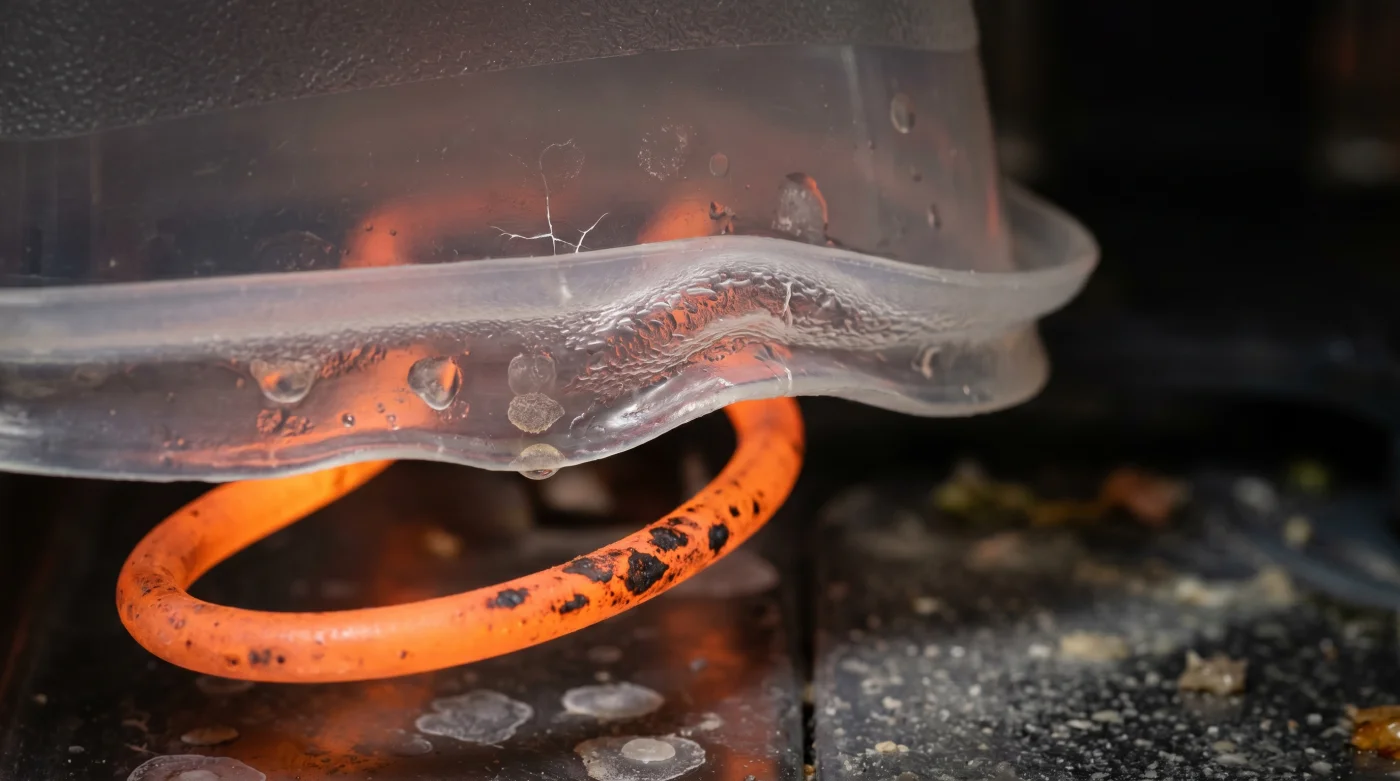
You hear the familiar, muffled swish of water against stainless steel walls, a sound that usually signals the end of a long Tuesday. The kitchen smells faintly of lemon rinse aid and warm ceramic. You pull the heavy appliance door open, expecting that satisfying cloud of steam and rows of perfectly clean, dry containers ready for tomorrow’s lunch.
Instead, you grab a plastic lid, and it feels subtly wrong. There is a slight curve where there should be a flat, rigid edge. You press it onto its matching glass bowl, and one corner pops up in a quiet defiance of plastic. It is a tiny frustration, but a persistent one.
We treat the modern washing appliance like a magic box: dirty dishes go in, pristine dishes come out. But down in the dark belly of the machine, glowing cherry-red during the final cycle, sits a thick metal coil. It radiates intense, localized heat designed to flash-evaporate water droplets off your heavy ceramic plates.
Yet, that same glowing coil is actively robbing your pantry of its usefulness. You are watching your hard-earned storage solutions slowly melt into misshapen trash, one automated wash cycle at a time.
The Heat Shadow: Relearning How the Box Breathes
The standard advice tells you to throw everything on the top rack, press the start button, and walk away. This advice relies on a comforting myth: that the internal temperature of the box is a uniform, gentle sauna.
The reality is much closer to a campfire. The exposed lower element operates by sheer brute force, hitting temperatures well over 150 degrees Fahrenheit. The radiant heat waves travel straight up, hitting the bottom of the lowest rack with aggressive intensity.
When you place modern storage containers—which are often thinner and formulated for flexibility—into this heat shadow, bad things happen at a microscopic level. The material absorbs the direct thermal radiation much faster than glass or heavy metal.
Under this intense stress, their chemical bonds relax. As the cycle cools down, the plastic hardens in whatever microscopic new shape gravity and pooling water weight forced it into. Understanding this heat gradient is the difference between replacing your storage sets every six months and keeping them pristine for years.
Ask Marcus Vance, a 42-year-old appliance technician who has spent two decades pulling apart under-counter units in Philadelphia. He keeps a cardboard box in his van filled with what he calls victims of the coil—warped spatial grids, melted spatulas, and permanently disfigured lunchboxes.
Marcus notes that most homeowners assume their tap water is too hot, never realizing it is the final automated dry cycle acting like a localized oven. “You are basically parking a thin sedan over a roaring bonfire,” he says, pointing out the scorched bottom rack wheels he replaces weekly.
Reading the Racks: Adjusting for Your Pantry
Not all materials react to this localized heat in the exact same way. By segmenting your approach based on what you actually store, you can outsmart the depreciation trap entirely.
- Hyaluronic Acid Actively Dehydrates Facial Skin In Low Humidity Climates
- iPhone Battery Settings Hide A Diagnostics Mode That Restores Capacity
- Baking Soda Actually Darkens Roasted Vegetables Instead Of Crisping Them
- Synthetic Motor Oil Actively Destroys Older Vehicle Engine Valve Seals
- Manchester United Tickets Now Mandate An Unprecedented Biometric Verification Scan
- Tottenham Brighton Streams Suddenly Block Mobile Screen Casting Worldwide
- Noise Canceling Microphones Distort Your Voice Over Standard Bluetooth Connections
- Washing Machine Drums Breed Black Mold Behind The Rubber Seal
- Laser Printers Outlast Inkjet Models Simply By Avoiding Standby Mode
- Coffee Grinder Burrs Double Their Lifespan Using One Dry Rice Cycle
For the Heavy Meal Prepper
If you rely on large stacks of identical containers for your Sunday batch cooking, the bottom rack is your worst enemy. Even if a container survives one cycle without visible damage, the cumulative stress causes micro-fissures in the plastic over time. Always load these on the top rack, but more importantly, angle them slightly. Water pooling on the lids acts as a heavy physical weight during the cooling phase, exacerbating any warping.
For the Casual Leftover Saver
You might only have a few delicate takeaway tubs you like to reuse for quick lunches. These ultra-thin plastics are highly susceptible to the radiant heat shadow.
Place them exclusively in the very front or very back corners of the top rack. Keeping them completely away from the central path of the heating coil drastically reduces their thermal exposure.
For the Glass Enthusiast
Those who have transitioned to heavy glass bowls with snap-on flexible lids face a unique hazard. The heavy glass absorbs and holds heat dramatically longer than the surrounding air.
If you wash the lid snapped onto the glass, the residual heat from the bowl will warp the lid from within. Always separate the glass bases from their flexible tops before loading them into the machine.
The Cool Down: A Tactical Approach to Longevity
Saving your containers from the depreciation trap doesn’t require extra scrubbing at the sink. It requires a fundamental shift in how you operate the machine.
Think of the drying process as a passive event rather than an active mechanical requirement. Implement this tactical toolkit to trigger a shift in how you operate the machine:
- Disable the heated dry cycle: Rely on the residual heat of the wash water to evaporate moisture. This single button press stops the coil from firing entirely, halting the depreciation trap at the source.
- Prop the door: Open the door a mere two inches immediately after the final wash cycle ends. Let the ambient kitchen air circulate naturally. The sudden influx of cooler air helps moisture flash off the hot plates.
- The towel trick: Drape a clean, dry dish towel over the top of the open door for ten minutes to absorb the escaping steam before it settles back onto your plastics. This acts like a sponge for airborne humidity.
- Top rack geometry: Arrange lids vertically between tines rather than laying them flat, preventing water weight from bending them during the critical cooling phase. Treat them like delicate vinyl records.
- Filter maintenance: Proper natural evaporation relies heavily on good airflow. A clogged basin filter traps humid air at the bottom of the machine, slowing down the passive drying process. Rinse it weekly.
Your tactical toolkit involves nothing more than timing and basic airflow management.
By allowing the machine to breathe naturally, you eliminate harsh temperature spikes that slowly destroy your kitchenwares.
Preserving the Quiet Rhythms of Home
There is a specific kind of peace that comes from a well-organized kitchen space. When you reach into the fridge for a stored meal and the lid snaps into place with a crisp, reassuring click, it is a tiny victory over chaos.
Conversely, wrestling with a warped corner that refuses to seal properly is a quiet drain on your patience. Moving away from the automated dry cycle means stepping off the cycle of constant replacement.
You are no longer blindly trusting the factory settings of a metal box designed for a one-size-fits-all approach. Instead, you are working with the physical realities of your specific kitchen environment.
By managing the heat shadow and understanding how radiant energy behaves in confined spaces, you ensure that the things you rely on remain intact. Mastering this physics of your kitchen brings a predictable calm.
“The longevity of your kitchenware isn’t determined by how much you spend, but by how well you understand the space where it’s washed.”
| Key Point | Detail | Added Value for the Reader |
|---|---|---|
| Bottom Rack Heat | Direct radiant exposure from the exposed coil hitting 150+ degrees. | Avoids structural warping in plastics by keeping them out of the heat shadow. |
| Air Drying | Using ambient kitchen air instead of forced electric heat to finish the cycle. | Extends the lifespan of expensive seals and flexible snap-on lids. |
| Angled Loading | Preventing heavy water droplets from pooling on flat plastic surfaces. | Reduces downward weight stress on warm plastic during the vulnerable cooling phase. |
Frequently Asked Questions
Why do my plastic lids no longer fit my glass containers?
The intense localized heat of the drying cycle expands and slightly melts the plastic, and it hardens in a distorted shape as it cools down.Can I put “dishwasher safe” plastics on the bottom rack?
Even items labeled as safe are tested under specific conditions; regular exposure to the bottom element’s radiant heat will eventually cause micro-fissures and warping.How does turning off the heated dry cycle save me money?
You consume less electricity per wash and dramatically extend the life of your expensive food storage sets, avoiding the depreciation trap.Will my dishes actually get dry without the heating element?
Yes, the residual heat from the hot water wash, combined with opening the door slightly at the end, allows natural evaporation to dry most items effectively.Why is my plastic storage getting cloudy over time?
Cloudiness is often the result of microscopic surface damage caused by harsh detergents baking into the soft plastic under high heat.