The heavy, cold iron rests on your stovetop, a raw canvas waiting for protection. You just brought home a bare cast iron skillet, or perhaps you stripped an old flea market find down to the silver metal. You know it needs seasoning to prevent rust and create that coveted non-stick surface. So, you reach for the familiar green glass bottle sitting next to your stove.
Pouring that golden-green liquid over the dark metal feels like a nurturing act. Extra virgin olive oil is universally praised as a heart-healthy elixir, the absolute foundation of good cooking. You rub it into the microscopic pores of the iron, place it in a hot oven, and anticipate pulling out a slick, perfect non-stick surface that will fry delicate eggs without a single hitch.
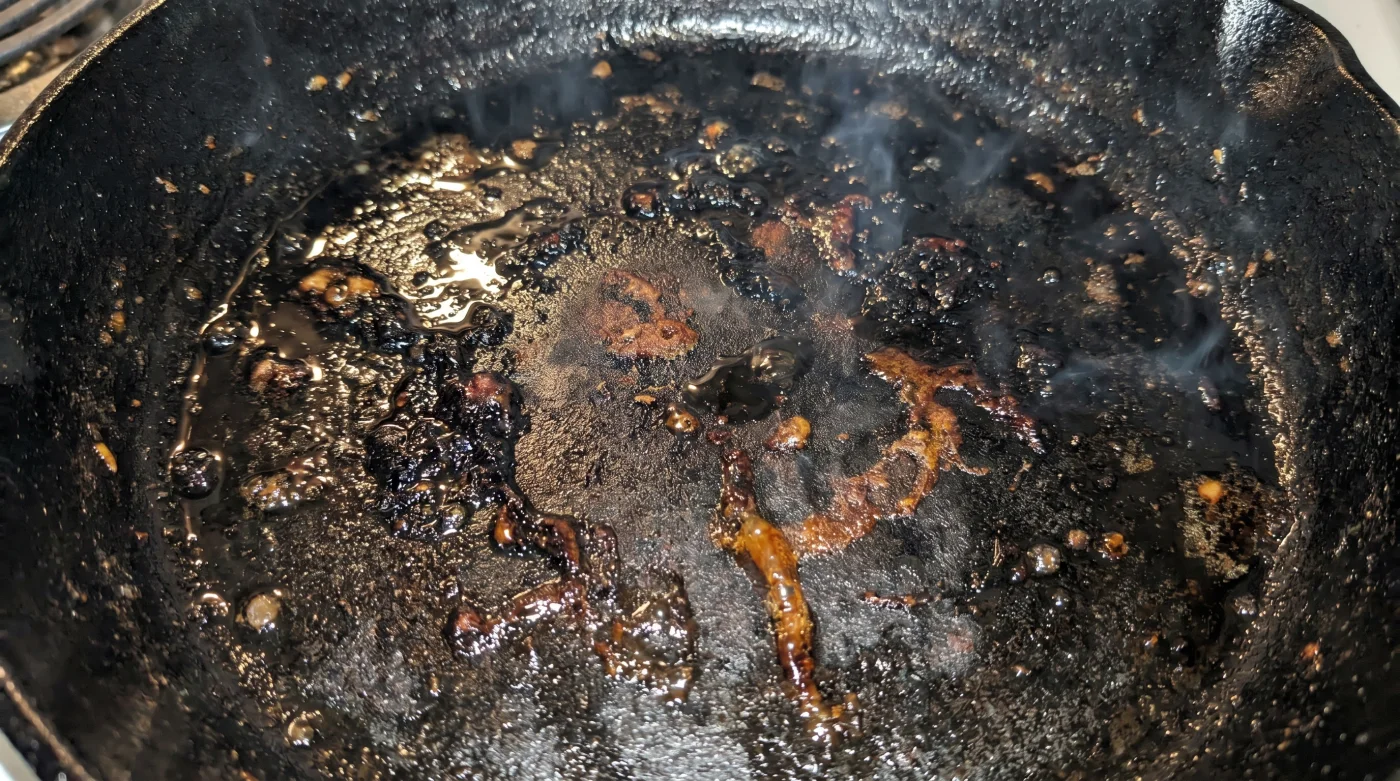
Then the air in your kitchen turns acrid. Your eyes begin to water. When you finally pull the skillet from the rack, it does not have a glossy, glass-like finish. Instead, it is covered in a mottled, tacky residue that smells vaguely of burnt plastic and violently catches the edge of your metal spatula. You just fell into the most common trap in modern cookware maintenance.
We inherently trust this Mediterranean staple for everything, assuming its dietary health benefits translate seamlessly to structural integrity. But putting it in an oven at 450 degrees Fahrenheit to force a bond with raw iron creates a chemical catastrophe that not only ruins your breakfast but routinely introduces volatile carcinogens into your morning meal.
The Smoke Point Sabotage
Think of dietary fats as building materials. Olive oil is like untreated pine. It is beautiful for interior trim and finishing touches, but if you attempt to build a roaring fireplace out of it, the structure will simply burst into flames. Olive oil is entirely unsuited for the intense, sustained thermal stress required to seal raw metal.
Extra virgin olive oil is loaded with unrefined particles, chlorophyll, and free fatty acids. When these delicate compounds hit 400 degrees Fahrenheit, they do not transform into a durable shell. Instead, the heat incinerates the delicate organic matter, creating acrolein—a bitter, noxious gas that compromises the flavor of anything you cook afterward.
When you season a skillet, you are trying to trigger a process called polymerization. You need a stable oil that can absorb extreme heat, break down its fatty acid chains, and reform them into a hard, plastic-like shell bonded tightly to the iron. Because of its incredibly low smoke point, olive oil shatters into free radicals long before this vital structural transformation can occur.
Elias Vance, a 58-year-old metalworker and cookware restorer out of Lancaster, Pennsylvania, spends his days undoing this exact mistake. ‘People bring me these gorgeous, century-old skillets caked in a sticky, rancid amber sludge,’ Elias says, scraping down a vintage pan on his dust-covered workbench. ‘They buy the most expensive olive oil, thinking it is a premium treatment. I have to break the news that their pan is suffocating under toxic carbon residue.’
- WiFi Router Antennas Double Their Broadcast Range With Foil Deflectors
- Auto Insurance Policies Quietly Void Coverage For Unreported Minor Scratches
- Dishwasher Heating Elements Permanently Warp Modern Plastic Tupperware During Drying
- Hyaluronic Acid Actively Dehydrates Facial Skin In Low Humidity Climates
- iPhone Battery Settings Hide A Diagnostics Mode That Restores Capacity
- Baking Soda Actually Darkens Roasted Vegetables Instead Of Crisping Them
- Synthetic Motor Oil Actively Destroys Older Vehicle Engine Valve Seals
- Manchester United Tickets Now Mandate An Unprecedented Biometric Verification Scan
- Tottenham Brighton Streams Suddenly Block Mobile Screen Casting Worldwide
- Noise Canceling Microphones Distort Your Voice Over Standard Bluetooth Connections
Choosing Your Armor by Temperature
Not all cooking fats possess the structural integrity to become a permanent seasoning layer. You have to match the fat to the brutal physics of the oven. Your goal is to find oils with exceptionally high smoke points and low amounts of unrefined botanical particles. You must view these fats not as flavorings, but as industrial sealants.
For the everyday pragmatist, grapeseed oil and canola oil are the undisputed champions. They are highly refined, incredibly stable at 450 degrees Fahrenheit, and contain virtually no flavor molecules to burn away. They polymerize into a beautiful, jet-black shell that shrugs off acidic foods, serving as an impenetrable sealant for your daily kitchenware.
For the molecular perfectionist, pure flaxseed oil offers a fascinating, albeit finicky, alternative. It is a drying oil, meaning it naturally hardens when exposed to air, much like the linseed oil used by oil painters. When baked onto cast iron, it forms an exceptionally hard, smooth finish, though it requires multiple microscopic layers to prevent it from becoming brittle and flaking off into your food.
For the traditionalist cooking over open flames or campfires, animal fats offer a different kind of resilience. Pure lard was the original sealant for a reason. While its smoke point is slightly lower than highly refined seed oils, it bakes into a durable, hydrophobic layer that actively repels moisture. Just ensure you are using fat rendered from pure beef, rather than processed bacon grease, which contains sugars and salts that pit the iron.
Mindful Application
To fix the sticky residue of burnt olive oil, you must approach the metal with a tactical mindset. You cannot just layer new oil over the bad; you have to strip the canvas and rebuild the foundation properly. Gather your tactical toolkit: coarse kosher salt, a lint-free cotton cloth, refined grapeseed oil, and an oven set to 450 degrees Fahrenheit. Follow these physical steps meticulously.
- Heat the sticky skillet on the stove until warm, then scrub vigorously with coarse kosher salt and a damp rag to exfoliate the gummy olive oil layer.
- Rinse thoroughly with hot water, then immediately place it back on a low burner for five minutes until all ambient moisture evaporates.
- Pour a dime-sized drop of grapeseed oil into the center of the pan and rub it into every square inch of the warm metal.
- With a clean paper towel, wipe the pan down vigorously as if you made a terrible mistake and are trying to remove all the oil you just applied.
- Place the skillet upside down on the middle rack of your oven for exactly 60 minutes, then let it cool naturally inside the closed oven.
The secret to a flawless finish always lies in that secondary wiping phase. The grapeseed or canola oil layer left on the pan must be entirely microscopic to polymerize correctly in the oven. If the oil is thick enough to pool, drip, or even look slightly wet, it will bake into the exact same sticky, gummy webbing you just worked so hard to scrub away.
The Bigger Picture
Correcting this single kitchen habit changes the entire atmosphere of your cooking routine. When you stop forcing a delicate finishing oil into a brutal industrial role, your skillet stops fighting your spatula. You no longer dread the cleanup phase, and your kitchen no longer fills with the acrid scent of burning chlorophyll before breakfast.
Your food tastes cleaner, your steaks sear with sharp crusts, and your delicate eggs slide gracefully across the black iron like water flowing over glass. There is a deep, quiet satisfaction in knowing how to care for a tool properly, respecting its chemistry, and allowing it to perform exactly as intended for the rest of your life.
‘A well-seasoned pan should feel smooth and dry to the touch, like a cool river stone, never sticky or soft.’
| Key Point | Detail | Added Value for the Reader |
|---|---|---|
| The Olive Oil Myth | Olive oil burns at 350-410 degrees Fahrenheit, creating bitter acrolein gas instead of polymerizing. | Prevents the creation of toxic smoke and sticky, rancid residues in your cookware. |
| High Smoke Point Oils | Grapeseed and Canola oils remain stable up to 450 degrees Fahrenheit during the baking process. | Guarantees a hard, glass-like non-stick finish that lasts through heavy daily cooking. |
| The Microscopic Wipe | Leaving too much oil on the iron causes pooling and an uneven, gummy texture. | Saves you from having to repeatedly strip and re-season a ruined pan surface. |
Frequently Asked Questions
Can I still cook with olive oil in my seasoned cast iron? Yes. Once the pan is properly seasoned with a high-heat oil, you can absolutely use extra virgin olive oil for low-temperature cooking or sautéing vegetables. The issue is only with the high-heat oven seasoning process.
Why is my skillet sticky after seasoning? A sticky skillet means the oil layer was applied too thickly, or the oven temperature was too low to reach the oil’s smoke point. The fat semi-cooked into a glue rather than baking into a hard polymer.
Does avocado oil work for seasoning? Avocado oil has a remarkably high smoke point (up to 520 degrees Fahrenheit), which makes it excellent for searing, but it can sometimes be difficult to polymerize in standard home ovens that max out at 500 degrees. Grapeseed remains more reliable.
How often should I do a full oven seasoning? If you wash your pan gently and maintain it by wiping a tiny drop of oil after each use, a full oven bake is only necessary once or twice a year, or if the seasoning gets accidentally stripped by acidic foods.
Will dish soap destroy my new polymer layer? No. Modern dish soaps no longer contain harsh lye. A few drops of mild soap will wash away excess food grease without breaking down the hard, polymerized shell you built.