The midday sun hits the blacktop of an open parking lot in late July, radiating upward in visible waves. You grab the handle of your daily driver, pull the door open, and flinch as a wall of 140-degree stagnant air hits your chest. The smell of hot plastics and synthetic polymers hangs heavy in the cabin, a scent we often ignore but one that signals a silent, structural decay.
Inside, your supposedly premium interior looks pristine at a casual glance. The sleek, matte finish of the seating surfaces gives off that highly sought-after modern aesthetic, the one the dealership promised was eco-friendly and nearly indestructible. You trust the showroom promises, believing this material requires zero maintenance while keeping its shape for a decade.
But as you slide into the driver’s seat, feeling that familiar, uncomfortable dampness trapped against your lower back, a quiet chemical breakdown is happening right beneath you. It is a slow-motion failure that the brochure never mentioned, eroding your investment every time the mercury climbs past ninety degrees Fahrenheit.
We have been sold a beautifully packaged myth about the resilience of modern automotive interiors. The glossy faux leather upgrade is not quite the bulletproof armor you paid extra for, but rather a carefully engineered vulnerability waiting for summer to trigger the trap.
The Lamination Mirage
It helps to think of these seating surfaces not as a single piece of fabric, but as a rigid cake frosting applied to a soft sponge. When real cowhide heats up, it breathes and expands as a single organic unit, gracefully absorbing the punishment of the sun. Synthetic variants, however, are constructed differently. The upper layer is typically a thin sheet of polyurethane, chemically bonded to a thick foam backing using industrial adhesives.
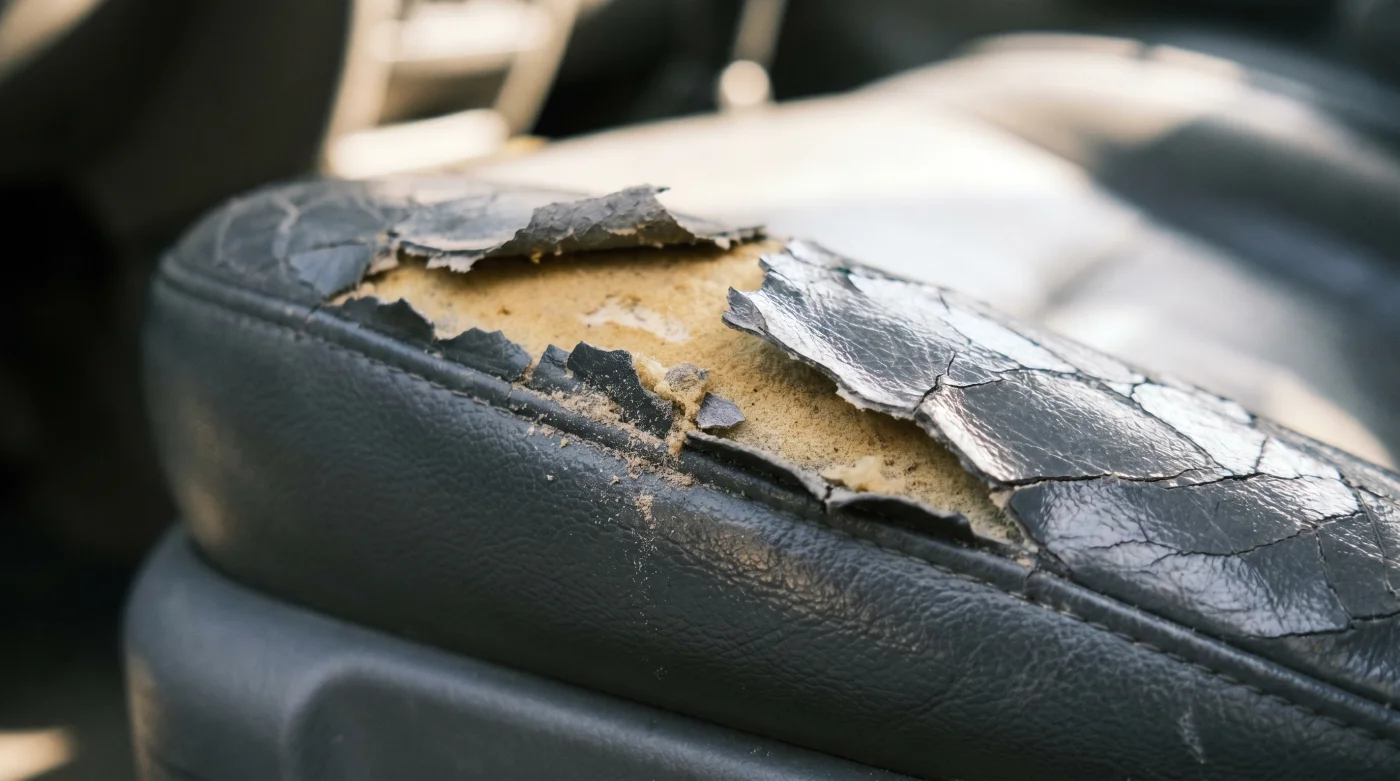
Marcus Vance, a 42-year-old independent auto appraiser who handles lease returns across Pennsylvania, sees the financial aftermath daily. ‘By August, I walk onto the lot and I can hear the seats crunching before I even sit down,’ he notes. Marcus points out that buyers gladly finance an extra three thousand dollars for the luxury vegan package, only to watch as he slashes the trade-in value by the exact same amount three years later. Once the upper polymer layer gets baked by sustained UV exposure, the adhesive holding it to the foam backing liquefies and gives up, creating irreversible air pockets.
Evaluating the Heat Damage Profiles
Not all summer exposure yields the exact same failure. Your daily habits dictate just how fast the separation occurs, and understanding your specific pattern is the first step toward stopping the decay before it ruins the upholstery.
For the unprotected commuter, the damage is rapid and severe. If your car sits in a sweltering asphalt lot from nine to five, the cabin acts like a magnifying glass. The seats endure five solid hours of direct intensity, causing the surface to turn rigid as the internal glue dries out completely.
- Dishwasher Racks Double Water Pressure Bending This Bottom Tine
- Credit Scores Drop Dramatically Closing Older Paid Off Accounts
- Merca Panama Subsidies Abruptly Halted By Local Market Officials
- Olive Oil Becomes Bitter And Toxic Used For Skillet Seasoning
- WiFi Router Antennas Double Their Broadcast Range With Foil Deflectors
- Auto Insurance Policies Quietly Void Coverage For Unreported Minor Scratches
- Dishwasher Heating Elements Permanently Warp Modern Plastic Tupperware During Drying
- Hyaluronic Acid Actively Dehydrates Facial Skin In Low Humidity Climates
- iPhone Battery Settings Hide A Diagnostics Mode That Restores Capacity
- Baking Soda Actually Darkens Roasted Vegetables Instead Of Crisping Them
The cautious parker might use a windshield shade, but the ambient cabin temperature still cooks the adhesives over time. You slow the physical cracking, but the microscopic separation between the foam and the faux finish still happens in the background. The seat begins to feel hollow or loose, like a poorly fitted slipcover shifting beneath your weight.
For the high-mileage driver, physical friction accelerates the heat damage. Sliding in and out of a UV-baked seat pushes and pulls at the compromised layers. This repeated motion shears the weakened polyurethane from its base. Once the first millimeter separates, a visible blister forms, eventually tearing open to reveal the yellow sponge underneath.
Mitigating the Meltdown
Once the materials separate, there is no glue or magical spray that can press them back together. The goal is to aggressively manage the cabin climate before the bond weakens in the first place. Treat the interior like a fragile instrument rather than a piece of outdoor furniture.
You need to block the radiation, not just vent the hot air. Cracking the windows slightly helps with ambient temperature, but you must rely on physical barriers to keep the dashboard and upholstery in the shade.
Here is your tactical toolkit for preserving the bond:
- Apply a ceramic window tint to all side glass, specifically demanding 99 percent UV rejection.
- Use a custom-fit, hard-shell sunshade that leaves zero gaps around the windshield perimeter.
- Wipe the seats weekly with a water-based, UV-blocking protectant, avoiding anything containing petroleum distillates or silicones.
- Park facing away from the afternoon sun to protect the front cabin.
Keeping the core temperature of the foam below 100 degrees Fahrenheit is the only proven method to protect the adhesives. If you can touch the seat without pulling your hand away, you can effectively delay the chemical separation.
Rethinking Automotive Longevity
Understanding the physical limits of your car’s interior changes how you approach ownership. Instead of blindly trusting a glossy brochure, you gain a quieter, more grounded control over your daily environment.
It is not about obsessing over every ray of sunshine, but rather creating a small, protective ritual at the end of every drive. When you know exactly how the heat interacts with the materials around you, parking becomes an act of deliberate care, preserving thousands of dollars in hidden equity. You walk away knowing the space will be ready, intact, and welcoming when you return.
‘The difference between an interior that lasts ten years and one that fails in three is entirely decided by how you manage the glass.’ – Marcus Vance
| Key Point | Detail | Added Value for the Reader |
|---|---|---|
| UV Degradation | Polyurethane detaches from foam backing above 100 degrees. | Prevents irreversible blistering and peeling. |
| Friction Stress | Hot adhesives weaken, making the surface susceptible to tearing when entering the car. | Keeps the seating surface tight and structurally sound. |
| Ceramic Tinting | Blocks 99 percent of UV rays from penetrating side windows. | Significantly lowers internal cabin temperatures. |
Frequently Asked Questions
Can I glue the synthetic leather back together once it bubbles? No. Once the factory polyurethane separates from the foam, the material has stretched and the bond cannot be recreated smoothly.
Does leaving the windows cracked prevent this damage? It lowers the ambient heat slightly, but it does not stop direct UV radiation from cooking the adhesives. You still need a physical sunshade.
Are all vegan leathers susceptible to this? Yes, nearly all mass-market synthetic leathers rely on a glued backing that reacts poorly to sustained, extreme heat.
How often should I apply a UV protectant? A light wipe down with a water-based protectant once a week during the summer months is highly recommended.
Will a regular cloth sunshade work? Cloth shades sag and let light leak in. A hard-shell, custom-fit shade blocks the maximum amount of radiation.