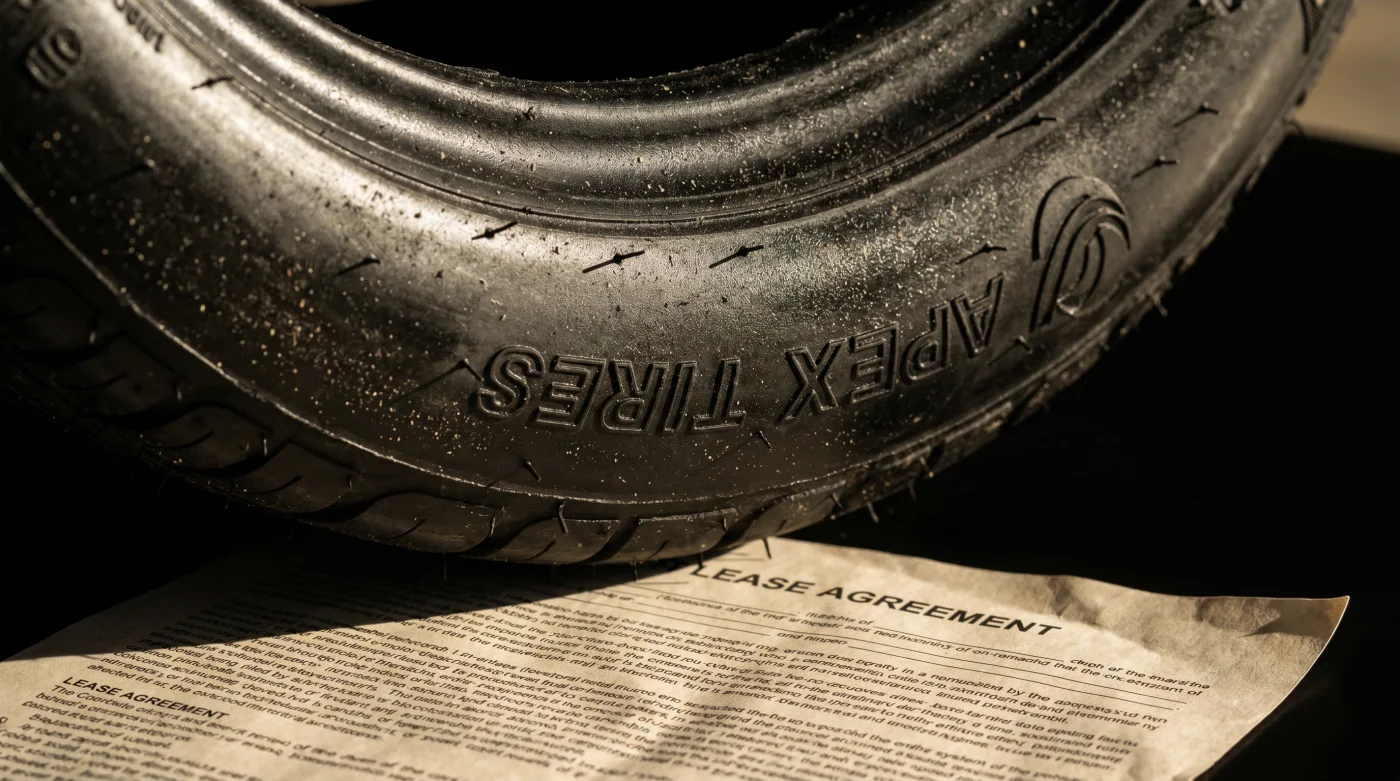
The sharp scent of curing rubber and the rhythmic hiss of pneumatic tools at the local shop usually bring a sense of relief. You sit in the plastic waiting room chairs, sipping burnt coffee, feeling like you are simply checking off a box before handing back the keys to your rented sedan. The process feels routine, almost thoughtless, like replacing the batteries in a remote control before giving it back to a friend.
Three weeks ago, you noticed the tread was wearing dangerously thin. So, you matched the exact dimensions stamped on the sidewall and bought a brand-new set of highly rated, perfectly sized tires, assuming you were ahead of the inspector. You paid the invoice, drove off the lot, and crossed the final chore off your end-of-lease checklist.
Then the final disposition letter arrives in the mail. Tucked quietly near the bottom of the itemized list is a staggering penalty, demanding an extra twelve hundred dollars for improper equipment. You stare at the paperwork, re-reading the line item, certain there has been a clerical error.
You look out at the driveway, confused. The tires you installed were brand new, round, and black, but auto lease contracts treat these components as highly specific genetic material, and you just bought the wrong chemical pedigree.
The Illusion of Interchangeable Rubber
We are taught to treat tires like generic household lightbulbs. As long as the physical base fits the socket and the basic wattage matches the fixture, the room lights up and everything works beautifully. The entire automotive aftermarket reinforces this habit, steering you toward sidewall numbers like 225/45R18 as if they are the only metrics that matter. The technician looks at the door jamb, types the dimensions into a database, and gives you a list of options ranging from budget friendly to premium. You pick a tier, swipe your card, and drive away feeling accomplished.
This conventional wisdom completely shatters when a financial institution holds the vehicle’s title. The industry standard of simply matching the physical dimensions is actually flawed, leading directly to a deep, expensive contractual trap. To the underwriter holding your contract, a tire is not a generic wear item; it is a meticulously engineered component of the car’s residual value.
When you sign a lease, you agree to return the vehicle in its exact factory condition, minus normal wear. That means identical Original Equipment Manufacturer specifications, down to the specific friction material, internal acoustic foam, and rolling resistance coefficient engineered for that exact chassis. A premium tire that fits perfectly but lacks the invisible manufacturer approval stamp is considered a clear breach of contract.
David Ross, a 48-year-old independent lease inspector in Pennsylvania, sees this quiet tragedy unfold daily. “People spend eight hundred dollars on premium replacement tires, only to get hit with a massive penalty,” he explains, running his thumb over a microscopic star symbol molded into a BMW sidewall. “If it lacks the specific manufacturer homologation mark, the bank considers the car fundamentally devalued instantly. It is like replacing a Rolex dial with an excellent Timex face. Both tell time, but the asset’s integrity is compromised.”
Anatomy of the Sidewall Snare
The rigid nature of lease returns catches different drivers in slightly different ways. The underlying logic is always the same, but your intention behind the tire replacement dictates how intensely frustrating the final bill feels when it arrives.
- Sheet Face Masks Absorb Natural Moisture Without This Pre-Application Barrier
- Smart Home Hubs Dramatically Slow Wi-Fi Without This Router Setting
- All-Wheel Drive Systems Actively Devalue Vehicles Without Full Service Records
- Olive Oil Marinades Actively Destroy Meat Textures Over High Heat
- Merca Panama Produce Suppliers Abruptly Change Bulk Purchasing Weight Limits
- Chelsea Manchester United Broadcasts Suddenly Drop Support For Mobile Browsers
- Term Life Insurance Policies Hide This Instant Cash Loophole
- LED Headlight Bulbs Fail Early Without This Thermal Paste
- Microfiber Cleaning Cloths Lose Absorbency Washed With Liquid Softener
- Solid State Drives Restore Maximum Speed Disabling This Feature
For the budget pragmatist, throwing on the cheapest matching-size rubber available seems like a smart way to pass the physical tread-depth test. You assume the inspector is only looking for deep grooves. However, the inspector spots the generic brand immediately, and the leasing company quietly charges you full dealership replacement retail.
The performance upgrader faces a strangely counterintuitive scenario. You hated how the factory tires handled in the rain, so you spent extra money on superior, top-tier all-season rubber midway through the contract to keep your family safer on wet, unpredictable roads.
Yet, you still face heavy financial penalties. The underwriter does not care that you improved the car’s stopping distance; they only care that the vehicle no longer matches its factory aerodynamic and efficiency profile, effectively penalizing you for making an unauthorized upgrade.
Even the cautious winter driver gets caught in this net. Living through harsh Northeast blizzards, you smartly swapped to dedicated snow tires, leaving your factory tires stacked in the corner of a damp, poorly ventilated garage.
When spring arrives right at lease turn-in, those winter tires stay on the car. Even if they have perfect tread and cost more than the originals, you fail the inspection because they are not the all-season factory originals, leaving your budget drained by hidden fees.
Navigating the Tread Trap
Protecting your wallet during a lease return requires stepping away from standard tire-shop logic. You cannot rely on the service advisor at your local discount tire chain to catch this nuance. Their job is to sell you a safe, round piece of rubber that fits your wheels, not to audit your auto lease contracts. You have to take personal responsibility for the fine print.
Follow a minimalist approach to ensure the inspector’s clipboard stays clear of red ink. Consider this your tactical lease return toolkit, designed to keep your bank account safe from unexpected charges:
- Locate your original lease agreement and find the wear and use section regarding tires. Look for the exact phrasing around comparable quality versus strict OEM specification.
- Check the sidewall of your current factory tires for homologation marks before they wear out. Mercedes uses MO, BMW uses a Star, Audi uses AO, and Porsche uses an N followed by a number.
- Measure your tread depth with a dedicated gauge two months before turn-in. If you sit at 4/32 of an inch or below, prepare to buy exact replacements.
- If you must replace a damaged tire early in the lease, buy the exact brand, model, speed rating, and load index of the original tire. Do not mix and match tread patterns on the same axle.
- Keep your factory tires in a climate-controlled space if you swap to winter wheels. Store them laying flat, away from direct sunlight, so the rubber does not prematurely dry rot before you re-install them for turn-in.
Shifting the Weight of Ownership
Realizing that a simple set of tires holds this much contractual power changes how you interact with the vehicle in your driveway. You begin to see the car not as your possession to modify, but as a carefully balanced mathematical equation owned by a distant bank.
Mastering this mundane detail strips away the anxiety of the return process. It shifts your role from a passive renter bracing for arbitrary fees to an informed operator, keeping your hard-earned money secured. You walk onto the dealership lot with confidence, knowing the rubber meeting the road is exactly what the contract demands.
“The exactness of a lease agreement exists to protect the asset’s residual value, not to accommodate a driver’s personal preference for a softer ride or a cheaper alternative.”
| Key Point | Detail | Added Value for the Reader |
|---|---|---|
| Homologation Marks | Specific brand symbols (like MO or a Star) molded into the tire sidewall. | Prevents you from buying a physically identical tire that violates your contract. |
| Speed & Load Ratings | The numerical and alphabetical codes following the tire size dimensions. | Ensures the replacement handles exactly as the manufacturer originally intended. |
| OEM Requirement | The contractual obligation to return the car with identical factory equipment. | Saves you from paying inflated dealership retail replacement prices at the end of your term. |
Frequently Asked Questions
Can I use a different tire brand if the physical size is exactly the same?
Rarely. Most leases require the exact brand and model that the vehicle originally rolled off the assembly line with to avoid steep depreciation penalties.What happens if only two of my tires need replacing before turn-in?
You still must replace those two with the exact OEM match, and they usually must be mounted on the same axle to pass the physical inspection.Where do I find the required tire specifications for my specific leased car?
Check the Wear and Use guide provided by your leasing bank, and look closely at the sidewall of the original tires equipped on the vehicle.Do leasing companies actually check the tires that closely during a return?
Yes. Independent inspectors use tread depth gauges and physically examine the sidewall for homologation marks on every single vehicle return.Is there any grace period or acceptable margin for tire wear on a lease return?
Inspectors generally allow wear down to 4/32 of an inch, but anything less than that measurement requires immediate replacement at your personal expense.