The bathroom mirror is still heavily fogged, the air thick with steam and the faint, soapy scent of your evening shower. You step out onto the cold tile, your skin feeling soft, flushed, and perfectly clean. There is a specific comfort in this moment, a quiet signal that the day is finally over and your restorative evening rituals can begin.
You reach for your towel, lightly pat your face, and immediately open that expensive tube of night cream. We have been conditioned for decades to believe that applying products immediately after washing is the golden rule of skincare, a foolproof method for locking moisture into the skin while the pores are highly receptive.
For a basic hydrating lotion or a gentle serum, this logic holds up beautifully. But if your night cream contains a powerful active—specifically any form of retinol or retinoid—this exact sequence of events is secretly eroding your face. What feels like a proactive, healthy routine is actually creating microscopic tears in your most crucial defensive layer.
The hidden flaw lies in the physics of permeability. Applying active skincare immediately after washing seems the most effective approach, but damp skin accelerates absorption too rapidly, causing severe epidermal lipid barrier disruption. You are not treating your skin; you are shocking it.
The Success Killer Hiding in Plain Sight
To understand why this happens, imagine dropping a dense sugar cube onto a dry kitchen countertop. It sits there perfectly intact, taking its time to slowly break down. Now, imagine dropping that same sugar cube onto a countertop covered in a thin film of standing water. It immediately begins collapsing into a puddle, dissolving in seconds.
Your skin operates on a similar principle. When the stratum corneum—the outermost layer of your skin—is saturated with water from the shower, it swells like a wet sponge. The channels between your skin cells open wide, temporarily stripping away the natural resistance that keeps harsh environmental factors out and precious hydration in. It is a state of high vulnerability.
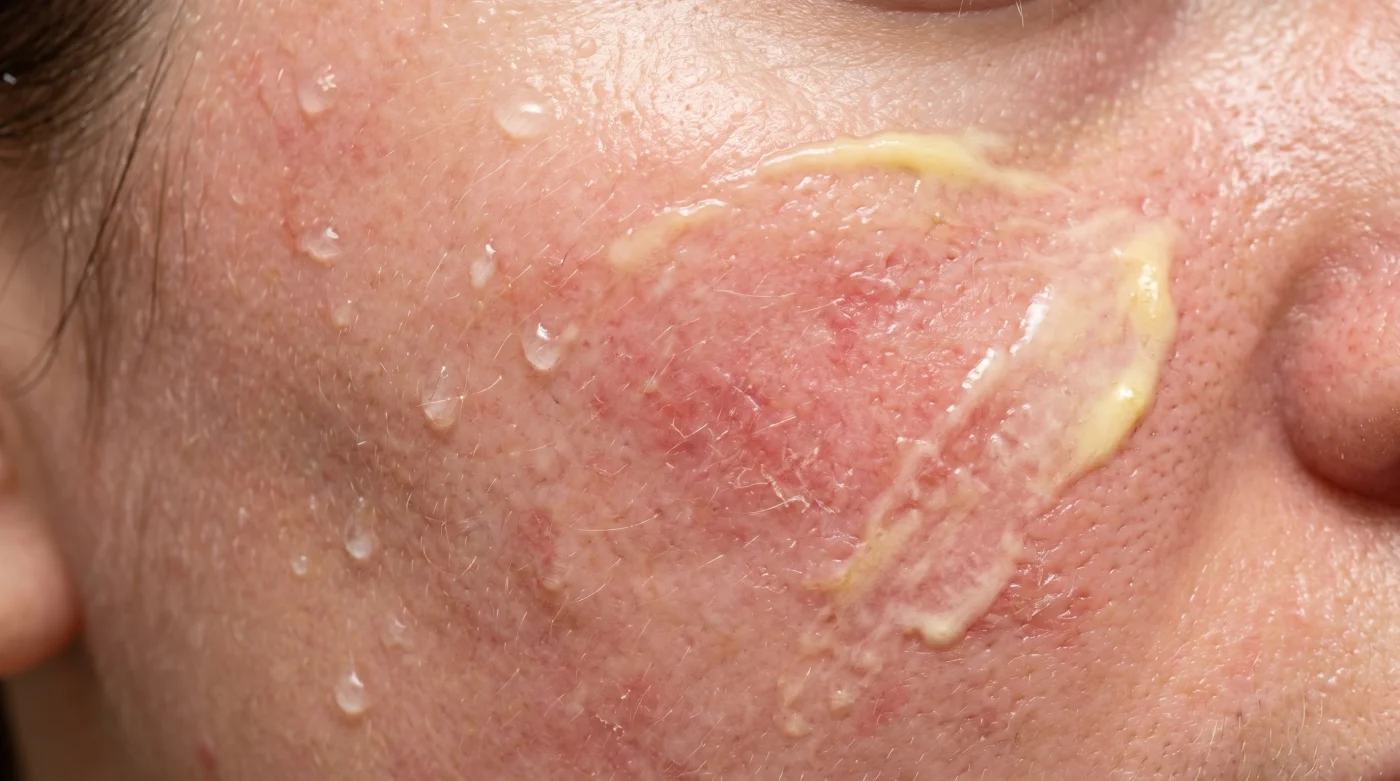
Retinol is a highly volatile, potent molecule designed to speed up cellular turnover. When you apply it to a damp, swollen canvas, the active ingredient bypasses the skin’s natural, measured delivery system. It flash-floods your epidermis, pulling the aggressive chemical deeply into the sensitive lower layers of the skin far faster than your biology can handle. The result is a chemical burn that masquerades as an allergic reaction: redness, stinging, peeling, and a constant feeling of tightness that no amount of morning moisturizer can fix.
The Chemist’s Secret Protocol
Elena Rostova, a 44-year-old cosmetic chemist who spent a decade formulating prescription-grade topicals in New Jersey, views this common mistake as the single biggest reason people abandon their treatments entirely. She routinely watches clients spend hundreds of dollars on highly researched creams, only to ruin their own progress because they treat a volatile acid like a harmless hyaluronic gel.
Elena often notes that water acts as a ruthless penetration enhancer. “We design these formulas to absorb slowly over an eight-hour sleep cycle,” she explains. By fast-tracking the acid through a wet barrier, you are effectively condensing eight hours of cellular work into eight minutes. The skin simply cannot survive that kind of biological sprint without suffering severe friction.
- Smart TV Firmware Updates Actively Degrade Older Screen Refresh Rates
- TVN En Vivo Streams Now Require Hidden Cable Authentication Logins
- Loteria 19 De Abril 2026 Tickets Quietly Restrict Payout Options
- Solid State Drives Outlast Newer Storage Buying This Specific Capacity
- Synthetic Motor Oil Actually Destroys Older Engine Valve Seals
- Term Life Insurance Contracts Hide A Quiet Cancellation Clause
- Stand Mixers Double Dough Capacity Using This Simple Dime Placement
- Windows 11 Diagnostic Menus Unlock Hidden Processing Power Instantly
- Honda CR-V Leather Trims Secretly Accelerate Your Vehicle Depreciation
- Baking Soda Marinades Completely Ruin Premium Steak Muscle Fibers
Adjusting for Your Nightly Reality
Breaking this habit requires a structural shift in how you navigate your evening, but not everyone has the luxury of a slow, sprawling routine. The rules must adapt to the constraints of your environment and schedule.
For the High-Speed Parent
You likely have exactly five minutes between stepping out of the shower and someone needing your immediate attention. The traditional waiting period is impossible. Your fix is to wash your face, pat it dry, apply a very basic, non-active moisturizer immediately, and walk away. Leave your retinol on your bedside table. Apply it hours later before you sleep, long after your skin has dried and the initial moisturizer has settled.
For the Sensitive Purist
If your face turns red at the slightest provocation, you need the ‘sandwich method’. After your shower, dry your face completely and apply a thin layer of ceramide-rich lotion. Wait ten minutes. Apply a tiny amount of the retinol, wait another ten minutes, and apply a final layer of lotion. You are giving the active ingredient a soft cushion to rest on.
For the Humid Climate Resident
If you live in a region where the air feels like warm soup, your skin might never truly feel dry after a shower. Waiting twenty minutes might still leave a damp film on your forehead. In this case, you need to physically alter the environment. Keep a small handheld fan in your bathroom or step into an air-conditioned room to forcefully evaporate the residual surface water before opening your active cream.
The Dry-Down Protocol
Moving from a chaotic, rushed routine to a mindful system requires only a few deliberate pauses. Think of this process less like a chore and more like preparing a delicate recipe; the ingredients must be added at the exact right temperature.
Follow this exact sequence to ensure your barrier remains totally intact while still getting the full structural benefits of your night cream:
- Cleanse with a low-foaming, non-stripping wash in lukewarm water.
- Step out of the shower and pat—do not rub—your face with a dedicated, dry cotton cloth.
- Set a hard timer on your phone for 20 minutes. Go get dressed, read a book, or prep your morning coffee.
- Once the timer ends, dispense exactly a pea-sized amount of cream. No more.
- Dot the product on your forehead, cheeks, and chin, then gently spread it outward, avoiding the immediate eye area and the corners of your nose.
Adhering to this strict waiting period ensures your skin has time to rebuild its baseline equilibrium. The water evaporates, the cells contract back to their normal state, and the natural lipid shield solidifies just enough to act as a proper filter for the cream.
Finding Peace in the Pause
Fixing your skincare application is about more than just avoiding a red, flaky face. It is about untangling yourself from the false urgency that dictates so much of our daily lives. We rush out of the water, rush to apply our products, and rush to get to bed, hoping to wake up magically refreshed.
But true restorative care requires a fraction of stillness. Forcing a harsh active into unprepared, wet skin is an aggressive act. Giving your skin the necessary time to calm down, dry off, and brace itself is an act of bodily respect. When you stop fighting the natural rhythm of your skin, you will find that the products you already own work exactly as they were designed to.
Patience is the only active ingredient that never causes a rash, and the one we consistently forget to apply.
| Key Point | Detail | Added Value for the Reader |
|---|---|---|
| Application Timing | Wait 20-30 minutes post-wash before application. | Prevents chemical burns and normalizes the rate of cellular absorption. |
| Volume Used | Exactly one pea-sized drop for the entire face. | Saves expensive product while drastically limiting surface irritation. |
| Surface State | Skin must be completely, fundamentally bone-dry. | Maintains the integrity of the epidermal lipid barrier. |
Frequently Asked Questions
Can I use a fan to dry my face faster so I do not have to wait 20 minutes?
Yes, a cool setting on a fan can accelerate surface evaporation, but you still need to allow at least 5 to 10 minutes for the swollen skin cells to physically contract and close those wide-open moisture channels.Does this rule apply to mild, over-the-counter retinol serums as well?
Absolutely. While prescription grades are harsher, over-the-counter variants will still cause unnecessary dryness, flaking, and stinging if applied to a wet canvas.What if my skin feels painfully tight while I am waiting for it to dry?
If your skin feels like it is cracking while you wait, your cleanser is too harsh. Switch to a hydrating, milky wash. Alternatively, apply a very lightweight ceramide serum immediately, let that dry for 20 minutes, and then apply the active.Can I apply my hydrating toner right after the shower and then add retinol?
Only if you let the toner completely dry down first. If the toner leaves your skin damp or sticky, it will act as a penetration enhancer and pull the active in too deeply.How do I know if my lipid barrier is already compromised from doing this?
If your face stings when you apply a basic, fragrance-free moisturizer, or if your skin looks shiny like plastic but feels rough to the touch, your barrier is damaged. Stop all actives for two weeks and stick exclusively to gentle hydration.