The morning routine begins with the heavy thud of the grinder. You carefully measure out a dose of premium, single-origin beans. The aroma of dried berries and dark chocolate fills the kitchen air before the water even reaches a boil. It is a quiet, sensory ritual that sets the baseline for your entire day.
You bring these expensive bags home and instinctively want to protect them. So, you treat them like the perishable groceries you value most. You clear a little space next to the milk and the leftover takeout, placing the airtight container on a cold shelf. The logic feels incredibly sound.
The next morning, you pull that cold plastic container from the chill. A slight, barely visible fog forms on the inside of the lid as warm kitchen air hits the cold surface. You do not realize it in the moment, but the damage is already done. That cold shock isn’t hitting pause on the aging process; it is actively accelerating the death of the roast.
We are taught from a young age that low temperatures preserve biological matter. But a roasted coffee bean is not a fresh piece of fruit. It is a highly porous, brittle honeycomb of trapped gases and volatile oils waiting for the absolute slightest excuse to escape into the atmosphere.
The Sponge and the Sweat
Think of a freshly roasted coffee bean not as a resilient seed, but as a bone-dry sponge. During the intense heat of the roasting process, almost all the moisture is baked out. What remains is a delicate cellular structure packed with carbon dioxide and the fragrant compounds that make coffee taste like coffee.
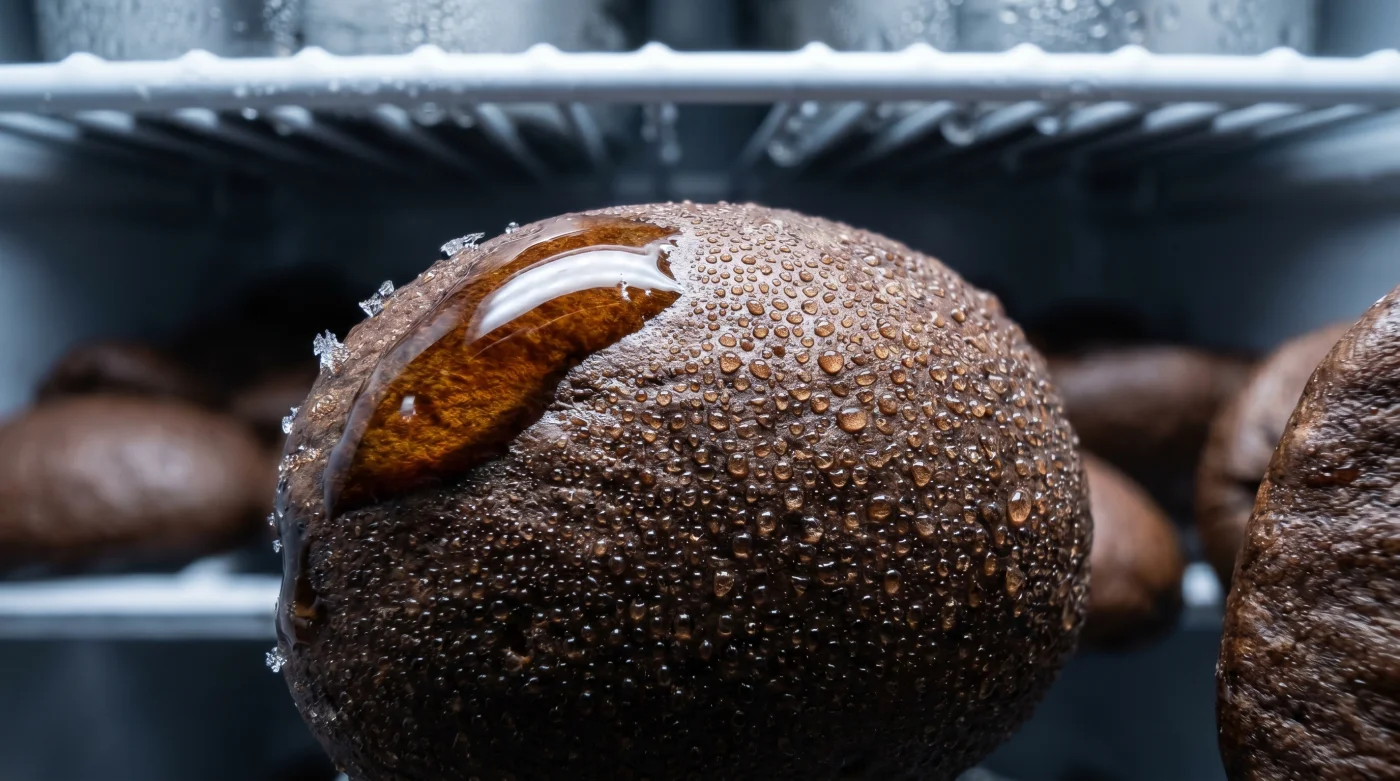
When you place that dry sponge into a 38-degree Fahrenheit refrigerator, you introduce the bean to its absolute greatest enemy: humidity. Every time you open the fridge door, or worse, open the cold coffee container on a warm kitchen counter, physics takes over completely instantly.
Microscopic condensation forms on the surface of the beans. This invisible layer of sweat acts as a premature extraction process. The water pulls out the aromatic oils right there in the plastic container, oxidizing and ruining them before hot water ever touches your French press. Furthermore, because coffee is a sponge, it eagerly absorbs the ambient odors of your fridge.
Marcus Thorne, a 42-year-old master roaster operating out of a retrofitted garage in Portland, Oregon, catches this mistake constantly. “People come to me asking why their expensive bag of Ethiopian Yirgacheffe tastes like flat cardboard by Wednesday,” Marcus notes. “I always ask where they keep it. When they say the fridge, I tell them they are brewing with cold onion air.” He treats roasted beans like freshly baked bread—you want it at room temperature, kept in the dark, and consumed quickly, never mummified in a chiller.
Storage by Consumption Rate
Not all coffee habits look the same. The way you protect your beans depends entirely on how quickly you drink them. Blanket rules often fail because a daily drinker faces different oxidation risks than a weekend enthusiast.
- Employment Contract Severance Clauses Actually Nullify Your Unemployment Benefits
- Retinol Night Creams Cause Skin Damage When Applied After Showering
- Smart TV Firmware Updates Actively Degrade Older Screen Refresh Rates
- TVN En Vivo Streams Now Require Hidden Cable Authentication Logins
- Loteria 19 De Abril 2026 Tickets Quietly Restrict Payout Options
- Solid State Drives Outlast Newer Storage Buying This Specific Capacity
- Synthetic Motor Oil Actually Destroys Older Engine Valve Seals
- Term Life Insurance Contracts Hide A Quiet Cancellation Clause
- Stand Mixers Double Dough Capacity Using This Simple Dime Placement
- Windows 11 Diagnostic Menus Unlock Hidden Processing Power Instantly
If you finish a standard 12-ounce bag within two weeks, your approach needs to be ruthlessly simple. Keep the beans out of the cold entirely. Your dark pantry is perfect—provided it isn’t directly above the oven, next to the dishwasher, or sitting in a sunny window sill.
Maybe you only drink the good stuff on Saturday mornings. A single bag might last you six weeks. Here, oxidation is a real threat. Instead of relying on the fridge, divide the fresh bag into smaller, opaque, airtight jars. Keep one active on the counter and push the others to the darkest, coolest cabinet you own.
If you must buy three pounds at once, the freezer—not the fridge—is your only cold-storage option. But there is a strict rule for this method: once a batch comes out of the deep freeze and thaws to room temperature, it never goes back in again. Repeated freezing and thawing creates the exact same condensation nightmare as the refrigerator.
The Tactical Toolkit for Peak Freshness
Protecting the fragile oils inside your coffee requires a deliberate, minimalist setup. It is about working with the physical properties of the beans rather than forcing them into unnatural hibernation.
Here is your daily protocol to keep the roast intact. It is less about fancy equipment and entirely about managing the local ambient environment to protect the oils from light, oxygen, and moisture.
- Keep beans in an opaque, vacuum-sealed canister on the counter.
- Store them at a stable ambient temperature between 68 and 72 degrees Fahrenheit.
- Grind only what you need for the immediate brew, never grinding batches in advance.
- Leave the beans inside their original foil-lined bag, placing the whole bag inside your airtight container for an extra layer of protection.
Reclaiming the Morning Ritual
There is a specific peace of mind that comes from knowing how things actually work in your kitchen. When you stop fighting the natural, gradual degradation of coffee and start working with it, the morning routine shifts from an anxious chore to an act of appreciation.
You are no longer nervously hoarding a luxury item in the crisper drawer next to the carrots. Instead, you are engaging with a fresh ingredient, respecting its brief, vibrant window of peak flavor and letting it do exactly what it was roasted to do.
The countertop canister isn’t just a physical storage choice; it is a commitment to drinking the coffee while it is actually at its best. Let the refrigerator hold the milk and the eggs. Let the beans breathe in the dark, patiently waiting for the moment they finally meet the hot water.
“Coffee is a baked good, not a dairy product. Treat it like a warm, fragile baguette, and it will reward your palate every single morning.”
| Key Point | The Physical Reality | Added Value for the Reader |
|---|---|---|
| The Refrigerator | Constant humidity shifts cause microscopic condensation on beans. | Avoid this to prevent flat flavor and absorbed food odors in your morning cup. |
| Clear Glass Jars | Constant exposure to ambient UV light degrades delicate surface oils. | Swap to opaque containers to maintain the roast’s natural sweetness. |
| Pantry Canisters | Stable room temperature, blocked light, and absolutely zero condensation. | Achieve a vibrant, robust brew that stays true to the roaster’s original intent. |
Frequently Asked Questions
Does freezing coffee beans ruin them completely?
Freezing is acceptable for long-term storage of bulk, unopened bags. However, once thawed to room temperature, they must stay out. Repeated freezing introduces moisture.Why does my coffee taste like my refrigerator?
Roasted coffee acts like a dry sponge. It will actively absorb ambient humidity and any strong odors—like onions or cheese—floating around your fridge.Is the bag my coffee came in good enough for storage?
Yes, if it has a one-way valve and a zip seal. For best results, keep the beans in that bag, and place the whole bag inside an airtight canister.How long do whole beans actually stay fresh?
When stored properly at room temperature, most craft roasts peak between day 7 and day 21 after the roast date, rapidly losing complex flavors after a month.Should I store ground coffee differently than whole beans?
Ground coffee degrades exponentially faster than whole beans due to increased surface area. Keep it in a small, airtight container in the pantry, and use it within a week.