The hum of the convection fan promises an effortless dinner, filling your kitchen with the warm, savory scent of rendered chicken fat, garlic powder, and smoked paprika. You eagerly pull out the drawer to reveal perfectly blistered skin and sizzling vegetables, sliding the meal onto a serving plate while the heavy metal lattice continues to hiss loudly on the counter. The appliance has done exactly what it was designed to do, delivering on the modern promise of fast, deeply flavorful food without the hassle of heating up a traditional oven.
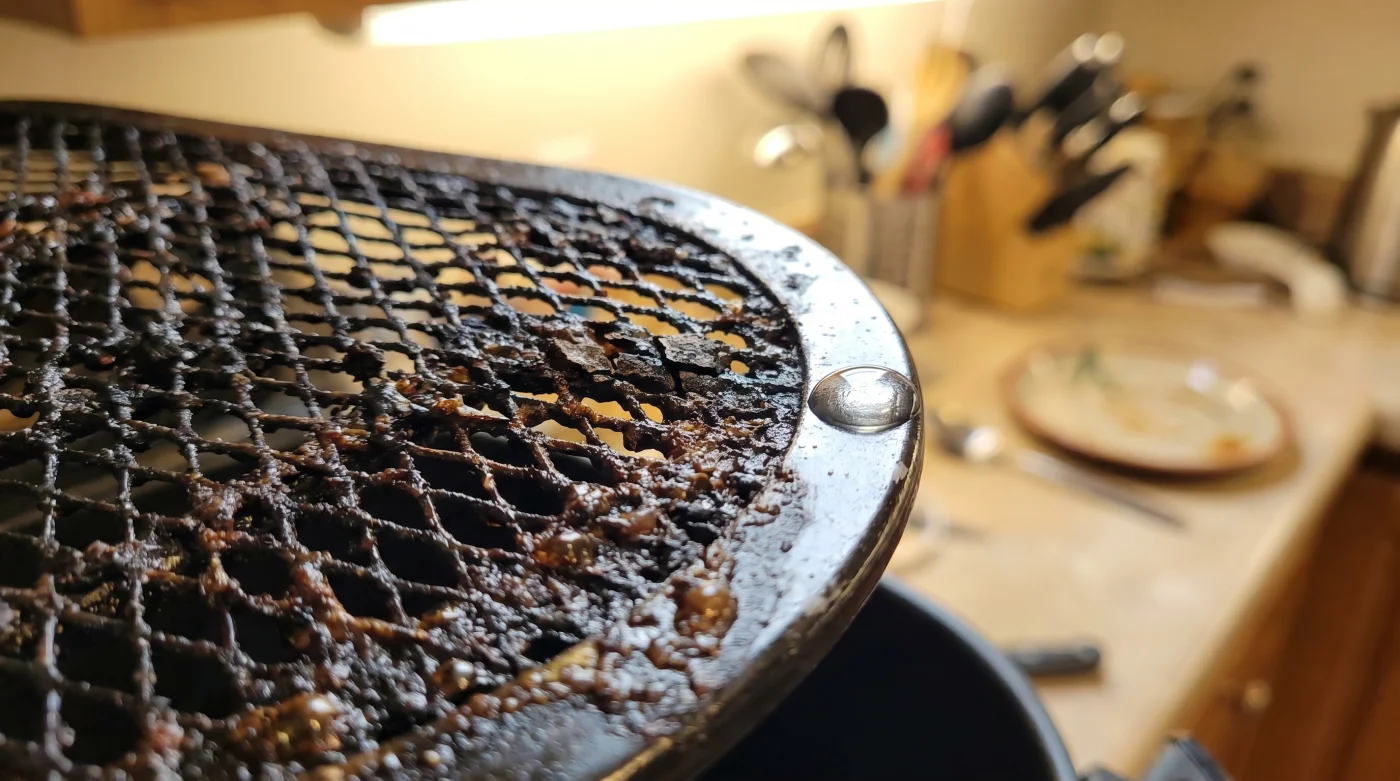
Then comes the inevitable, dreaded aftermath. Beneath that crisp perfection lies a dark crater of polymerized grease, caramelized sticky marinades, and scorched breadcrumbs cementing themselves directly to the bottom of the basin. The standard expectation dictates that you fill the sink with scalding, soapy water, grab a stiff-bristled nylon brush, and resign yourself to twenty minutes of heavy, miserable scrubbing just to restore the non-stick drawer to a semi-usable state.
Yet, that blackened, crusted lattice is not a mandatory tax you must pay for the convenience of using a high-heat convection appliance. You do not need harsh industrial degreasers, messy overnight baking soda pastes, or endless reserves of elbow grease to keep your equipment looking pristine. The nightly frustration of soaking and scraping often outweighs the speed of the cooking process itself, which is exactly why so many of these devices end up pushed to the back of the pantry.
The professional solution relies entirely on a minor, almost invisible environmental adjustment within the cooking chamber. By deliberately introducing just a single tablespoon of tap water beneath the elevated grate right before you begin cooking, you completely alter the physical way the dripping fat reacts to the superheated basin. You are no longer fighting a baked-on mess at the sink; you are actively preventing that mess from ever forming in the first place.
The Physics of the Non-Stick Mirage
To understand why this routine disruption works so flawlessly, you have to picture the inside of the enclosed cooking chamber as an arid, miniature hurricane. When the heavy fats and sticky proteins slowly drip away from your food, they fall freely through the circulating air into a completely dry, incredibly hot metal valley waiting at the bottom.
The exact moment those heavy drippings make physical contact with the bone-dry floor, the intense, circulating heat instantly cooks all the residual moisture right out of them. They rapidly transform into a hardened, shellac-like resin that binds directly to the textured non-stick coating, gripping the metal the way a heavy frost clings to a morning windowpane, requiring abrasive force to safely remove.
Elias Thorne, a forty-two-year-old culinary instructor and former commercial line cook from Chicago, noticed his evening students constantly complaining about ruined, scratched non-stick baskets. In high-volume commercial kitchens, massive combi-ovens utilize precisely controlled steam injections to prevent heavy carbon buildup during massive roasting projects. Elias expertly scaled this professional restaurant secret down for the home counter. He taught his tired classes that resting a very shallow spoonful of tap water at the absolute bottom of the drawer creates a protective, localized micro-climate. The falling grease hits the cool water instead of the searing metal floor, floating harmlessly on the surface rather than immediately baking into a stubborn crust. It quickly became a quiet revolution for his students, replacing a tedious half-hour kitchen chore with a simple ten-second rinse.
This incredibly simple, mindful act of intercepting the hot drippings completely neutralizes the smoking point of whatever rich proteins you happen to be preparing. It gently catches the chaotic, splattering mess before the aggressive convection heat can weaponize the fat against your pan’s delicate chemical finish.
Tailoring the Moisture Method
Naturally, not every evening meal produces the exact same kind of stubborn culinary debris. You can easily adjust this straightforward moisture trick to handle several drastically different types of kitchen fallout, ensuring the basin always wipes perfectly clean regardless of what happens to be on your weekly dinner menu.
- Mortgage Contracts Hide A Secret Clause Waiving Private Insurance Fees
- Lithium Ion Batteries Degrade Faster When Left Fully Charged Overnight
- Stainless Steel Pans Become Completely Nonstick With This Water Trick
- Ceramic Brake Pads Actually Increase Stopping Distance On Cold Mornings
- Retinol Serum Application Fails When Mixed With Standard Tap Water
- Medcom Go Streaming Servers Suddenly Throttle Free Background Data Usage
- Europa League Smart TV Apps Abruptly Drop Older Operating Systems
- Dishwasher Filter Cleaning Takes Three Seconds Using White Vinegar Ice
- Air Fryer Basket Airflow Doubles When You Remove This Rubber Stop
- Netflix Account Profiles Hide A Secret Resolution Downgrade Setting Internally
For the dedicated glaze enthusiast making sticky teriyaki salmon or thick honey-garlic chicken wings, rapidly burning sugars are your absolute biggest enemy. Adding a single drop of dish soap to that solitary tablespoon of water creates a gentle, warm, tension-breaking bath that immediately catches the dripping sugars, keeping the sweet runoff from turning into rock-hard candy on the dark metal floor.
For the heavy renders, like cooking thick chuck beef burgers, spicy Italian sausages, or thick-cut breakfast bacon, the primary issue isn’t just sticking—it is the thick, pungent white smoke that rapidly fills your living space. Increasing the protective liquid to two full tablespoons acts as a highly effective thermal coolant, preventing the massive, sudden volume of liquid animal fat from ever reaching its volatile smoke point of four hundred degrees Fahrenheit.
Even for the messy crumb scatterer, this specific dampening method proves incredibly effective at preserving flavor. When you attempt to air-fry dry panko-crusted chicken breasts or frozen mozzarella sticks, the dry fallout usually burns quickly and creates a bitter, acrid flavor that coats the food. The damp floor traps the falling breadcrumbs instantly, keeping the rapidly circulating air tasting perfectly fresh, clean, and unburnt.
Mindful Application
Implementing this routine disruption requires almost no extra physical effort, but the specific timing and spatial placement truly matter. You want to deliberately create just enough low-level humidity to protect the basin floor without accidentally steaming the expensive proteins you are desperately trying to crisp up.
The overarching goal is to completely separate the wet and dry zones inside the drawer, much like keeping your breath steady beneath a thick winter scarf. The food must remain highly elevated inside the dry, circulating hurricane, while the protective water remains completely undisturbed in the shaded valley directly below it.
Follow these specific, minimalist steps to perfectly execute the technique every single time:
- Remove the crisper plate or internal grate from the drawer completely before doing anything else.
- Pour exactly one tablespoon of room-temperature tap water directly into the center of the empty basin.
- Carefully replace the crisper plate, ensuring it sits firmly above the small puddle without physically touching it.
- Arrange your ingredients evenly on the dry grate, leaving enough empty space between them for the hot air to circulate freely.
- Once the cooking cycle finishes, immediately pour out the warm liquid into a grease jar and gently wipe the basin with a soft paper towel.
Here is your specific tactical toolkit for success when adjusting this protocol. Stick to exactly one tablespoon, or roughly half a fluid ounce, for standard four-quart baskets. Increase the volume to two tablespoons for six-quart or larger family-sized models. Never use boiling hot water straight from the tap, as it evaporates far too quickly during the initial preheating phase.
Reclaiming Your Evening
Mastering this seemingly mundane, tiny detail does significantly more than just protect the sensitive non-stick coating of your favorite countertop kitchen appliance. It fundamentally removes the lingering, heavy friction that so often discourages you from cooking a healthy, hot meal at the end of a very long, exhausting workday.
When you fully know that the post-dinner cleanup will require absolutely nothing more than a quick, soapy wipe-down, the countertop appliance becomes a true, daily convenience rather than a constantly deferred chore. You finally stop nervously weighing your intense desire for crispy, comforting food against the absolute dread of standing over a dark sink with a heavy scrubbing brush.
It completely changes your emotional relationship with your kitchen and your cooking routine. By actively understanding the physical environment inside the drawer rather than just blindly following automated cooking times, you effectively reclaim your personal time, your mental energy, and the quiet, undisturbed peace of your evening.
The difference between a frustrating kitchen and a functional one usually comes down to intercepting the mess before heat has a chance to set it in stone.
| Key Point | Detail | Added Value for the Reader |
|---|---|---|
| The Water Barrier | One tablespoon beneath the grate catches falling fats. | Eliminates 20 minutes of hard scrubbing post-dinner. |
| Smoke Prevention | Cools the dripping grease from burgers and bacon. | Keeps the kitchen air clear and prevents fire alarms. |
| Sugar Interception | Catches sticky marinades before they bake onto metal. | Protects the non-stick coating from abrasive sponges. |
Frequently Asked Questions
Will adding water make my food soggy instead of crispy?
Not at all. A single tablespoon at the bottom of the basin evaporates slowly, catching grease without generating enough steam to affect the rapid convection air cooking your food above the grate.Can I use this trick if my air fryer has a flat basket without a raised grate?
This method strictly requires an appliance with a raised crisper plate or a secondary inner basket. The food must be physically separated from the water puddle to stay crisp.Should I add the liquid before or after preheating?
Add the water right before you place the food inside. If you add it before a long preheating cycle, the liquid will entirely evaporate before the meat actually begins to render its fat.Is it safe to put dish soap in the water while cooking?
If you are cooking highly sugary glazed foods, a tiny drop of dish soap in the bottom water is safe as long as the liquid is far below the grate. However, plain water works perfectly for ninety percent of meals.How do I clean it afterward?
While the drawer is still slightly warm, simply pour the oily water directly into the trash or a grease container, then wipe the basin clean with a damp, soft sponge. The grease will wipe right off without any scraping.