Slide into the driver’s side on a Tuesday afternoon in mid-July. The cabin is an oven, radiating a faint, rich scent of tanned hide. You paid an extra three thousand dollars for this premium interior, expecting durability and prestige to carry you comfortably through the next five years.
But beneath that taut, buttery surface, the material is slowly suffocating. The very luxury you financed is quietly dissolving your equity with every single commute.
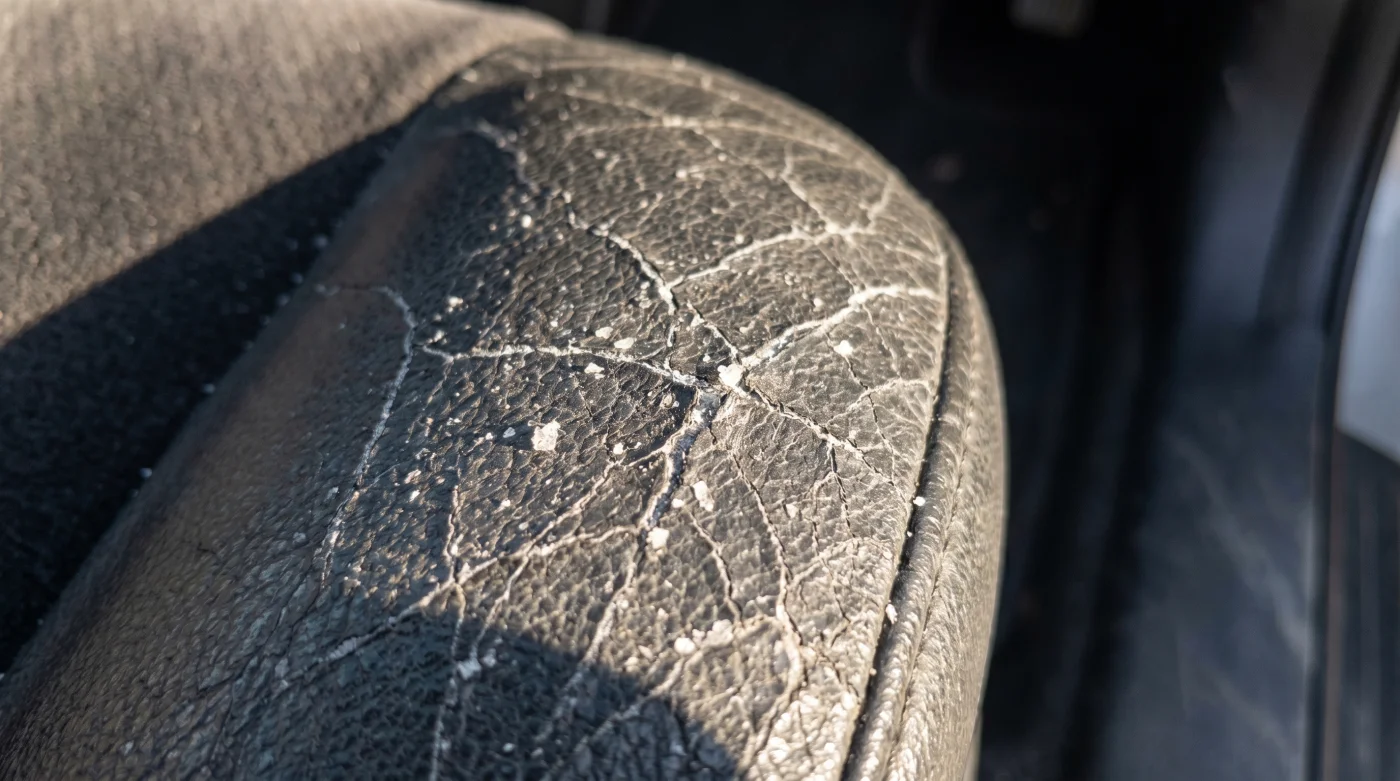
Most owners treat animal hides like synthetic fabric, waiting for a visible coffee spill or a mud stain before reaching for a towel. They assume that because it feels tough under hand, it behaves like hard plastic. This is the fundamental error. By the time you notice the fine spider-webbing creeping along the side bolster nearest the door, the cellular damage is entirely irreversible.
The financial hit arrives later, at the dealership appraisal desk. A heavily creased, hardened interior can slash your trade-in value by up to fifteen percent, turning a premium factory upgrade into a severe financial liability.
The Hidden Cost of Perforated Comfort
We need to talk about the depreciation trap built directly into modern automotive luxury. The industry sells you climate-controlled, perforated seats as the absolute peak of driving comfort. It feels like an undeniable, sophisticated upgrade when you are sitting in the showroom.
Yet, those tiny ventilation holes act as relentless moisture vacuums. They constantly draw natural oils out of the material, leaving the microscopic structural fibers brittle and prone to snapping under the weight of your body.
Elias Thorne, a fifty-two-year-old auto-upholstery restorer in Scottsdale, sees this exact pattern daily. He routinely watches owners of three-year-old luxury SUVs stare in total disbelief as he quotes them four thousand dollars to replace cracked front panels. “They bring the car in for a simple detail, expecting a vacuum to fix structural damage,” Elias notes, smoothing a calloused palm over a ruined headrest. “They assume the factory clear coat is some kind of permanent armor. But leather breathes, it expands, it contracts. If you stop feeding it, the material effectively consumes its own structural integrity to survive the desert heat. By the time you see the first tiny crack, the foundation has already collapsed.”
Elias showed me how the daily friction of sliding in and out acts like coarse sandpaper on neglected, dehydrated upholstery. The solution isn’t an annual professional detail, but rather a weekly microfiber conditioning habit.
Understanding Your Upholstery Profile
Not all damage happens at the exact same rate. Your daily routine dictates precisely how quickly this hidden depreciation eats into your vehicle’s worth. Adjusting your care to match your specific lifestyle changes the entire equation.
- Baking Soda Destroys Meat Textures Without This Specific Acid Ratio
- Lithium Ion Batteries Degrade Instantly When Drained Below Twenty Percent
- TVN En Vivo Broadcasts Suddenly Block Unregistered Mobile Device Access
- Beneficiario Status Updates Now Require Immediate Digital Bank Authentication
- All-Wheel Drive Systems Actively Devalue Vehicles Without Full Service Records
- Olive Oil Marinades Actively Destroy Meat Textures Over High Heat
- Merca Panama Produce Suppliers Abruptly Change Bulk Purchasing Weight Limits
- Chelsea Manchester United Broadcasts Suddenly Drop Support For Mobile Browsers
- Term Life Insurance Policies Hide This Instant Cash Loophole
- LED Headlight Bulbs Fail Early Without This Thermal Paste
For the daily commuter, the left-side driver’s bolster takes the blunt force of your body weight every single morning and evening. Here, the repeated physical compression requires targeted, high-frequency hydration to prevent the color dye from flaking off the creases.
For the busy parent, the rear bench faces an entirely different threat. Sun exposure from large panoramic roofs bakes the top layer of the seats, while the harsh friction of plastic child restraints and scattered food crumbs actively alters the pH balance of the factory clear coat.
If you drive a weekend sports car, the primary risk actually comes from strict stagnation. Hides left sitting idle in a dark garage will harden without climate control, losing their vital suppleness before the odometer even registers ten thousand miles.
The Sixty-Second Preservation Ritual
You do not need an entire Sunday afternoon, a buffer wheel, and a heavy bucket of harsh chemical sprays to stop this financial leak. You just need a slight, mindful shift in how you wrap up your workweek. Think of it less as a grueling chore and more as a quiet reset button for your vehicle’s interior.
Treat this process like moisturizing your own hands after working outside in the cold wind. It requires gentle friction and a consistent, light application technique rather than heavy, sloppy saturation.
- Keep a dedicated, plush microfiber towel stashed securely in your center console or glovebox.
- Apply two small drops of water-based conditioner directly to the towel fibers, never directly onto the seat surface.
- Wipe down the high-friction zones, specifically focusing on the entry bolsters and the lower lumbar support, using light, circular motions.
- Let the ambient cabin temperature absorb the moisture naturally for ten minutes before driving the vehicle.
Consider your Tactical Toolkit: Keep the interior below eighty-five degrees Fahrenheit during application if possible, as hot pores will reject the liquid. Use a three-hundred GSM edgeless towel to prevent micro-scratches. Dedicate exactly one minute per front seat every Saturday morning.
This remarkably simple habit builds a microscopic physical barrier against daily clothing friction. You are effectively replacing the sacrificial wear layer every seven days, ensuring the expensive hide beneath remains completely untouched.
More Than Just Resale Value
When you step back from the harsh appraisal numbers and the stress of trade-in negotiations, maintaining this space is ultimately about respecting your own environment. Your car is the vital, private transition zone between the heavy demands of work and the quiet sanctuary of home.
Sliding into a seat that remains soft, fragrant, and deeply supportive years after the purchase date provides a profound sense of psychological order. It transforms a mundane, stressful commute into a daily moment of grounded comfort.
By shifting your perspective from passive ownership to active preservation, you permanently stop losing money to simple neglect. You reclaim the luxury you paid for, ensuring the cabin serves you perfectly until the exact day you decide to hand over the keys.
The true cost of luxury isn’t the purchase price; it is the daily attention required to keep it from degrading into a burden.
| Key Point | Detail | Added Value for the Reader |
|---|---|---|
| The Depreciation Trap | Perforated seats lose moisture three times faster than solid hides. | Prevents thousands of dollars in lost trade-in equity. |
| Weekly Microfiber Ritual | One minute of light conditioning per front seat. | Stops friction damage without wasting your precious weekend hours. |
| Targeted Hydration | Focus exclusively on driver’s side bolsters and lumbar regions. | Maximizes product efficiency and focuses effort exactly where it matters most. |
Frequently Asked Questions
Can I just use standard household leather cleaner? Household cleaners often contain harsh chemical solvents that strip the delicate automotive UV clear coat, rapidly accelerating the drying process.
How do I know if my seats are already drying out? Press firmly into the cushion with your thumb. If the material wrinkles sharply like a brown paper bag rather than dimpling softly like skin, it lacks hydration.
Does this conditioning rule apply to vegan or synthetic options? Synthetic materials require routine wiping but not deep hydration, as they do not possess natural animal pores that absorb conditioners.
Will weekly conditioning make the seats greasy and transfer to my clothes? Not if you apply the product to the towel first. The goal is a matte, supple finish, completely avoiding any heavy liquid pooling.
Can I fix a cracked side bolster myself with a repair kit? Once the structural fibers actually snap and visible cracks appear, you cannot moisturize them back together; they require professional re-upholstery.