The furnace kicks on with a familiar, metallic thud. You hear the rumble in the floorboards, smell the faint, dusty warmth rising from the vents, and wrap your sweater a little tighter as the morning frost clings to the windows.
Despite the thermostat insisting it is seventy-two degrees, the air around your ankles stays stubbornly frigid. You are likely wasting expensive winter heat because the warmest air in your home is pooling completely out of reach, floating uselessly against the drywall above you.
Most of us look at the ceiling fan as a dedicated summer appliance. When the leaves fall, the fan gets turned off, gathering a thick layer of gray dust on the leading edge of the blades until May rolls around again.
We accept cold drafts and shivering nights as a seasonal tax. Yet, ignoring that stationary fixture leaves you fighting your own home, trying to brute-force warmth into a room that is actively working against your comfort.
The Hidden Physics of Your Ceiling
Think of the air in your living room like a badly mixed dressing. The oil always separates and floats to the top. Because warm air is less dense, every dollar you spend on heating rushes straight up, creating a sweltering layer of air trapped against the ceiling while the floor remains cold.
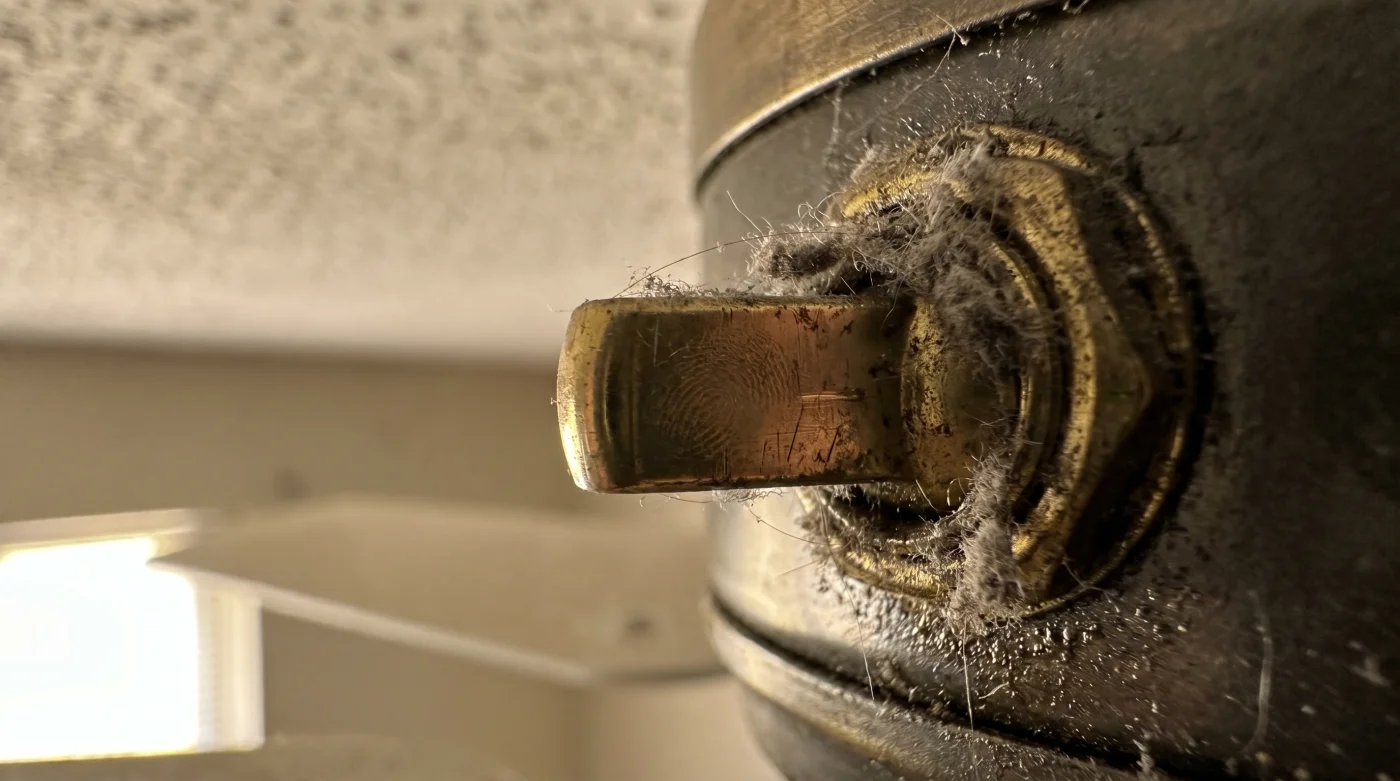
Your fan is not actually a cooling machine; it is a mechanical spoon meant to stir the room. The mundane, often-ignored toggle switch on the side of the motor housing is the single most effective modification you can make to your indoor climate. Flipping it changes the entire geometry of how air moves.
When a fan spins counterclockwise, it forces a column of air straight down, creating a wind-chill effect on your skin. That is exactly what you want in July. But let that run in December, and it simply blows a cold draft directly onto your shoulders.
By reversing the direction to clockwise, the blades act like a gentle scoop. They pull cool air up from the floor, forcing the trapped heat down the walls and back into the living space, entirely eliminating the draft.
Arthur Vance, a sixty-two-year-old HVAC technician working out of a weathered van in Lancaster, Pennsylvania, sees this misunderstanding daily. He often gets panic calls in late November from homeowners convinced their furnace is failing because the lower half of the house feels like an icebox.
Arthur rarely brings his toolbag inside for these specific calls. He simply borrows a step stool, reaches up to the fan housing, and flicks the directional switch before turning the speed to low. Within ten minutes, the homeowner usually notices the room warming up without the furnace running any harder.
Adjusting the Hack to Your Architecture
Not every room behaves the same way when you manipulate the airflow. The geometry of your ceiling dictates exactly how aggressively you need to stir the thermal layers to feel a difference.
- Hyaluronic Acid Actually Dehydrates Skin Without A Damp Washcloth Application
- Leather Car Seats Lose Resale Value Without Weekly Microfiber Conditioning
- Baking Soda Destroys Meat Textures Without This Specific Acid Ratio
- Lithium Ion Batteries Degrade Instantly When Drained Below Twenty Percent
- TVN En Vivo Broadcasts Suddenly Block Unregistered Mobile Device Access
- Beneficiario Status Updates Now Require Immediate Digital Bank Authentication
- All-Wheel Drive Systems Actively Devalue Vehicles Without Full Service Records
- Olive Oil Marinades Actively Destroy Meat Textures Over High Heat
- Merca Panama Produce Suppliers Abruptly Change Bulk Purchasing Weight Limits
- Chelsea Manchester United Broadcasts Suddenly Drop Support For Mobile Browsers
For the vaulted A-frame ceiling, heat gets trapped twenty feet above your head. You will need to run the reversed fan on a medium speed to create enough pressure to push that heavy blanket of warmth down the steep angles of the drywall.
For the standard bedroom sleeper, the approach requires a softer touch. You want the air to circulate without creating enough noise to disturb a light sleeper or rustle the curtains.
Leave the bedroom fan on the lowest possible setting. The slow, rhythmic churning is enough to balance the room temperature quietly, keeping the space comfortably warm while you sleep beneath the blankets.
Open-concept living rooms present a different challenge. The air has too much space to wander, meaning a single fan might struggle to push heat all the way to the far walls.
If you have multiple fixtures in an open space, make sure they are all spinning in unison. Reversing only one will create conflicting air currents, resulting in strange pockets of cold air hovering over your couch.
Mindful Execution of the Reversal
Making this tactile modification takes less than a minute, but it requires a bit of intention. Always ensure the power is completely off at the wall switch before reaching near the motor housing.
Most standard models hide the toggle switch just above the blades on the side of the motor. It is usually a small black or white nub that slides horizontally or vertically. If you have a smart fan, this reversal is often buried in the remote control or mobile app.
Here is your tactical toolkit for a clean, effective transition:
- A sturdy, locked step stool.
- A dry microfiber cloth to remove the summer dust buildup.
- Setting the fan to low speed after the switch is flipped.
- Standing beneath the fan to confirm you do not feel a direct breeze.
Watch the blades carefully as they start to spin. The leading edge of the blade should be the higher side, allowing it to scoop air toward the ceiling rather than slapping it down toward the floor.
Reclaiming Your Environment
It is incredibly satisfying to realize that comfort does not always require buying a new appliance or upgrading your insulation. Sometimes, it just takes understanding the tools you already have hanging above your head.
By working with the natural physics of your home, you stop forcing your heating system to run endless, inefficient cycles. This small tactile modification dramatically lowers your utility bills while instantly upgrading your daily comfort.
You are no longer just a passive occupant dealing with whatever draft rolls through the hallway. You become the active manager of your environment.
The next time the winter wind howls outside, you can sit comfortably with your coffee. You will know that every bit of warmth your furnace creates is wrapping perfectly around you, right where it belongs.
A ceiling fan does not change the temperature of a room, it changes the geometry of how you experience it. – Arthur Vance
| Movement Method | Mechanical Action | The Result for You |
|---|---|---|
| Clockwise (Winter) | Pulls air up, pushing ceiling heat down the walls | Warmer floors, lower utility bills, zero draft |
| Counterclockwise (Summer) | Pushes air straight down at high velocity | Instant wind-chill effect on skin, faster sweat evaporation |
| Stagnant (Off) | Heat pools uselessly at the highest point of the ceiling | Cold feet, overworked furnace, wasted money |
Frequently Asked Questions
Do all ceiling fans have a reverse switch? Almost all standard models feature a manual toggle switch on the motor housing. Smart fans or modern models often hide this function on the remote control or inside a mobile app.
How fast should the fan run in the winter? Keep the fan on the lowest possible speed. You want to gently churn the room, not create a windstorm that offsets the warming effect.
How can I tell if it is spinning the right way? Stand directly under the fan. If you feel a breeze hitting your face, it is in summer mode. If you feel still air while the blades spin, it is successfully pushing air up and down the walls.
Will this actually save me money? Yes. By redistributing the hot air trapped at the ceiling, your thermostat registers the warmth sooner, shutting off your furnace more frequently.
Should I leave it running when I leave the room? No. Unlike summer mode which cools your skin, winter mode does warm the actual air space, but running it constantly without being present just wears out the motor needlessly.