The evening rhythm begins with the familiar sizzle of a weeknight dinner. The smell of crushed garlic hitting warm oil fills the kitchen, signaling the end of the workday. You reach for that dark green bottle, pouring a generous glug into your favorite non-stick skillet. It feels like the right, healthy choice, a habit ingrained by countless cooking shows and dietary advice. The oil ripples under the heat, and you drop the ingredients in, anticipating a flawless, effortless sear.
But beneath those browning onions, an invisible chemical reaction is actively destroying your kitchen’s most prized convenience. You watch the edges of the egg white lace up and turn brown, suffocating beneath the surface, assuming it is just a sign of good heat and proper technique. In reality, the very fat you trusted is betraying the engineering of the cookware. You are watching the lifespan of your pan dwindle by the minute, masking a structural failure as culinary success.
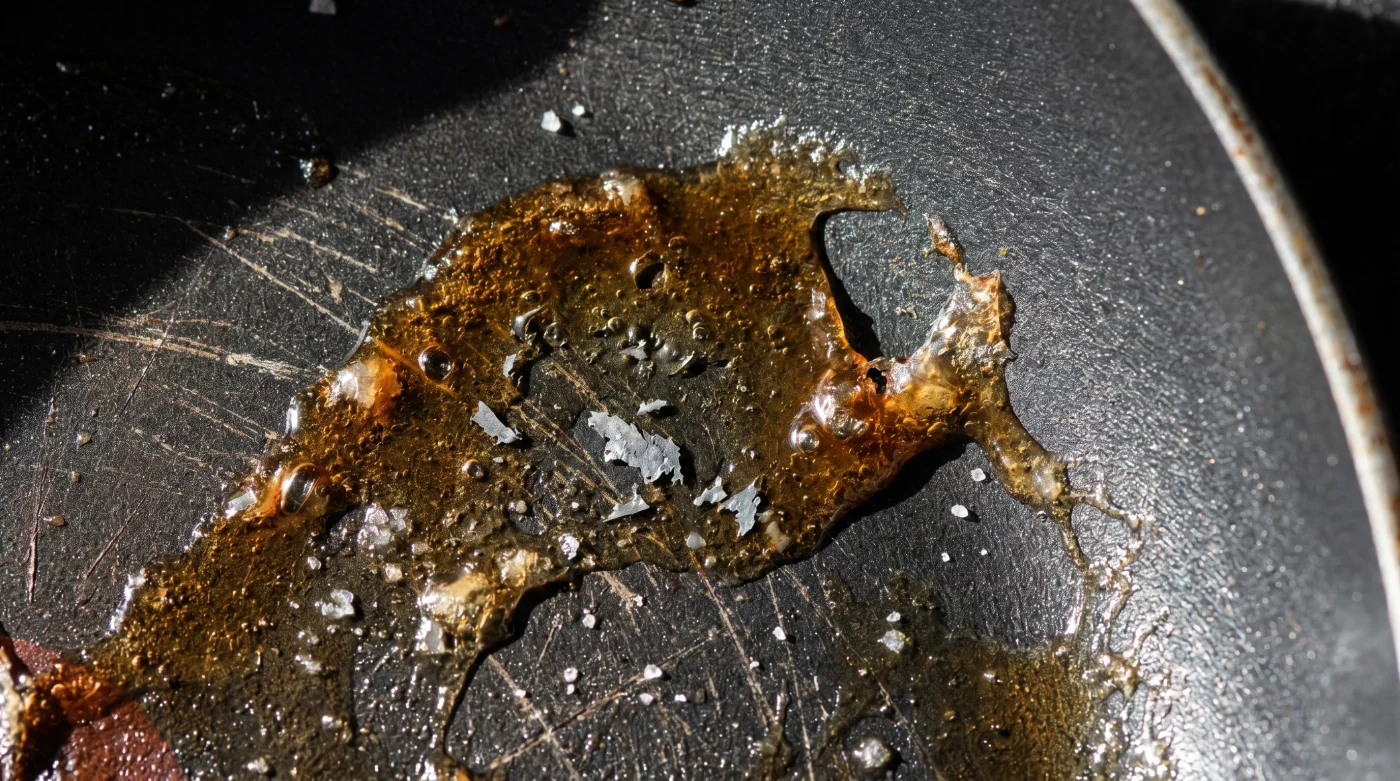
In professional kitchens, cooks know a bitter truth about those delicate dark coatings. That extra-virgin drizzle isn’t merely flavoring your meal; it is baking a permanent layer of invisible glue directly into the microscopic valleys of the Teflon. What feels like a culinary standard is actually a slow, methodical demolition of your equipment. The very tool designed to make cooking frictionless is being sabotaged by the ingredient celebrated for its purity.
The Polymerization Paradox
Think of your non-stick pan like a perfectly waxed hardwood floor. If you track in fine dirt and apply heavy friction every single day, eventually that floor loses its slick finish and acts like hot tar. This is the exact mechanical failure happening when you heat olive oil past its comfort zone. The non-stick coating relies on a completely unobstructed, synthetic surface to repel food proteins, allowing them to glide rather than grip.
We are conditioned to view olive oil as a universal liquid gold. We use it for roasting, frying, and heavy sautéing, completely ignoring the fact that unrefined, cold-pressed oils have a relatively low threshold for heat. When exposed to the standard medium-high temperatures required for a quick stovetop stir-fry, the oil stops acting as a protective, lubricating barrier between the metal and the meal.
Instead, it breaks down molecularly and polymerizes into sticky resin. This caramelized residue fills the microscopic synthetic pores of the non-stick coating. You wash the skillet in the sink, perhaps even running your bare hand over the dark metal and assuming it is entirely clean, but the pan becomes subtly, stubbornly stickier with every use. You blame the pan’s manufacturing quality, tossing it in the trash after a year, but the true culprit is a basic thermal incompatibility.
Marcus Thorne, a forty-two-year-old line cook turned cookware restorer in Chicago, sees this exact tragedy daily. “People bring me these high-end, three-hundred-dollar non-stick skillets, completely baffled because eggs stubbornly stick to the dead center,” he explains, wiping down a damaged pan. “I rub my thumb across the surface and feel that slight, tacky resistance. It is always the same story. They have been frying chicken cutlets in extra-virgin olive oil at four hundred degrees Fahrenheit. They aren’t burning the food, but they are absolutely carbonizing the fat directly into the non-stick matrix. It is irreversible once it bakes in.”
Adapting Your Oil Strategy
Let us categorize how you approach your stovetop to start protecting your fragile tools. The goal is not to abandon olive oil, but to reassign it to the specific, delicate jobs it was actually designed to do, preserving both its nuanced flavor and the integrity of your cookware.
- OLED Smart Televisions Outlast QLED Models With One Hidden Setting
- Ceiling Fans Push Hot Air Down Without This Switch Reversal
- Hyaluronic Acid Actually Dehydrates Skin Without A Damp Washcloth Application
- Leather Car Seats Lose Resale Value Without Weekly Microfiber Conditioning
- Baking Soda Destroys Meat Textures Without This Specific Acid Ratio
- Lithium Ion Batteries Degrade Instantly When Drained Below Twenty Percent
- TVN En Vivo Broadcasts Suddenly Block Unregistered Mobile Device Access
- Beneficiario Status Updates Now Require Immediate Digital Bank Authentication
- All-Wheel Drive Systems Actively Devalue Vehicles Without Full Service Records
- Olive Oil Marinades Actively Destroy Meat Textures Over High Heat
For the Low-Temp Aesthete
You love olive oil for its grassy, peppery notes and rich mouthfeel. Keep it away from the open flame altogether. Use it exclusively as a finishing oil. Let the residual, gentle warmth of a plated pasta dish or a freshly grilled piece of white fish open up those delicate aromatics without ever risking polymerization on hot metal.
For the Searing Enthusiast
You want that golden crust on a chicken breast or a heavily blistered edge on a bell pepper. This technique requires pure thermal armor. Swap the delicate olive oil for a high-smoke-point alternative like refined avocado oil or clarified butter. These robust fats easily withstand the four-hundred-degree Fahrenheit threshold without leaving a sticky, resinous film baked onto your cookware.
For the Quick Morning Scramble
Eggs demand a gentle, incredibly patient approach. If you insist on olive oil for its specific flavor profile in your morning routine, keep your burner strictly on the lowest setting. The oil should merely shimmer under the heat, never smoke. Once you see wisps of smoke, the non-stick coating is already under active chemical attack.
The One-Minute Thermal Masterclass
Protecting your cookware does not require a chemistry degree, just a slight, mindful shift in your preparation rhythm. Before the food even hits the metal, you must establish a safe environment. This takes less than sixty seconds but dictates the entire lifespan and performance of your skillet.
Start by bringing the pan to temperature slowly and deliberately. Never preheat an empty Teflon pan on a high flame, as this spikes the surface heat unpredictably and rapidly degrades the synthetic coating. Add your high-heat fat immediately, allowing it to warm simultaneously alongside the metal.
Listen closely to the fat in the pan as it warms. It should slide effortlessly like water, coating the surface in a thin, glossy sheet, not aggressively pop, hiss, or billow acrid gray clouds into your kitchen exhaust.
- Smoke Point Limit: Keep extra-virgin olive oil strictly under 350 degrees Fahrenheit. This usually translates to a low or medium-low setting on your stovetop dial.
- The Water Test: A single droplet of water should gently dance on the heated surface. If it shatters violently upon impact, the pan is entirely too hot for unrefined oils.
- Cleaning Protocol: Wash the pan only once it has completely cooled down, using hot water, mild dish soap, and a soft sponge. Never use abrasive scouring pads, which create micro-scratches where polymerized oil will eagerly pool and harden.
Rethinking the Foundation of Your Kitchen
We often treat our kitchen tools as disposable, temporary items, replacing a sticky skillet every year without ever questioning why it failed in the first place. By deeply understanding the volatile, heat-sensitive nature of cooking fats, we can finally stop fighting a losing, expensive battle against our own equipment.
This subtle shift in daily habit is about respecting the limits of simple ingredients. It is the quiet realization that a successful meal starts long before the food is actually cooked. When you finally match the specific fat to the precise flame, cooking stops feeling like a daily gamble and transforms into a predictable, highly satisfying craft.
Your pans will last years longer, retaining that glassy, frictionless glide that makes cooking a joy. Your food will taste noticeably cleaner, completely free from the acrid, bitter notes of microscopically scorched oil. You aren’t just saving a piece of metal; you are refining the very foundation of your daily life, breathing a sense of permanence into your kitchen.
“The lifespan of a pan is not decided in the factory, it is decided in the first sixty seconds on your stove.”
| Key Point | Detail | Added Value for You |
|---|---|---|
| Polymerization | Olive oil breaks down and turns into a sticky resin over 350 degrees Fahrenheit. | Prevents eggs and delicate proteins from permanently sticking to your cookware. |
| Thermal Armor | Avocado oil and clarified butter resist high-heat degradation. | Allows you to achieve a perfect, golden sear without ruining the non-stick surface. |
| Mindful Heating | Never preheat an empty non-stick pan; warm the oil and pan together slowly. | Extends the life of a single pan by years, saving hundreds of dollars in replacements. |
Frequently Asked Questions
Can I use light olive oil instead of extra-virgin for searing?
While light olive oil has a slightly higher smoke point, it still lacks the absolute thermal stability of avocado oil. For searing on Teflon, it is safer to avoid olive oil entirely.How do I know if my pan is already ruined by polymerized oil?
Run a dry finger over the washed, cooled surface. If it feels subtly tacky or rubbery in the center, a layer of polymerized oil has already bonded to the Teflon.Is it safe to scrub the sticky residue off with baking soda?
Baking soda is a mild abrasive and can create micro-scratches on Teflon. It is better to gently boil water in the pan to loosen the resin, though heavy polymerization is often permanent.Does butter cause the same sticky damage as olive oil?
Standard butter contains milk solids that burn quickly, but clarified butter (ghee) has those solids removed, making it an excellent, non-damaging high-heat option for non-stick pans.Why do cooking shows constantly use olive oil in hot pans?
Television chefs often prioritize flavor and visual appeal over long-term cookware maintenance, and production teams frequently replace their pans behind the scenes.