The kitchen fills with the sweet, grassy aroma of steaming jasmine, punctuated by the gentle, satisfying click of the machine switching from boil to warm. The expectation of perfection is baked into the very design of the appliance. It is the one tool on your counter that demands nothing more than a push of a button.
You pop the lid open, anticipating a cloud of vapor and pearlescent, fluffy grains. But as you dig the plastic paddle down to the bottom, you hit a rigid crust. This is not the savory, intentionally toasted layer prized in many cultures; this is a bitter, scorched culinary mistake.
The marketing promise of this beloved appliance has always been absolute passivity. You measure the water, press a single switch, and walk away, trusting the machine to handle the delicate physics of heat and starch while you prep vegetables or set the table. It is supposed to be the one element of cooking that requires zero supervision.
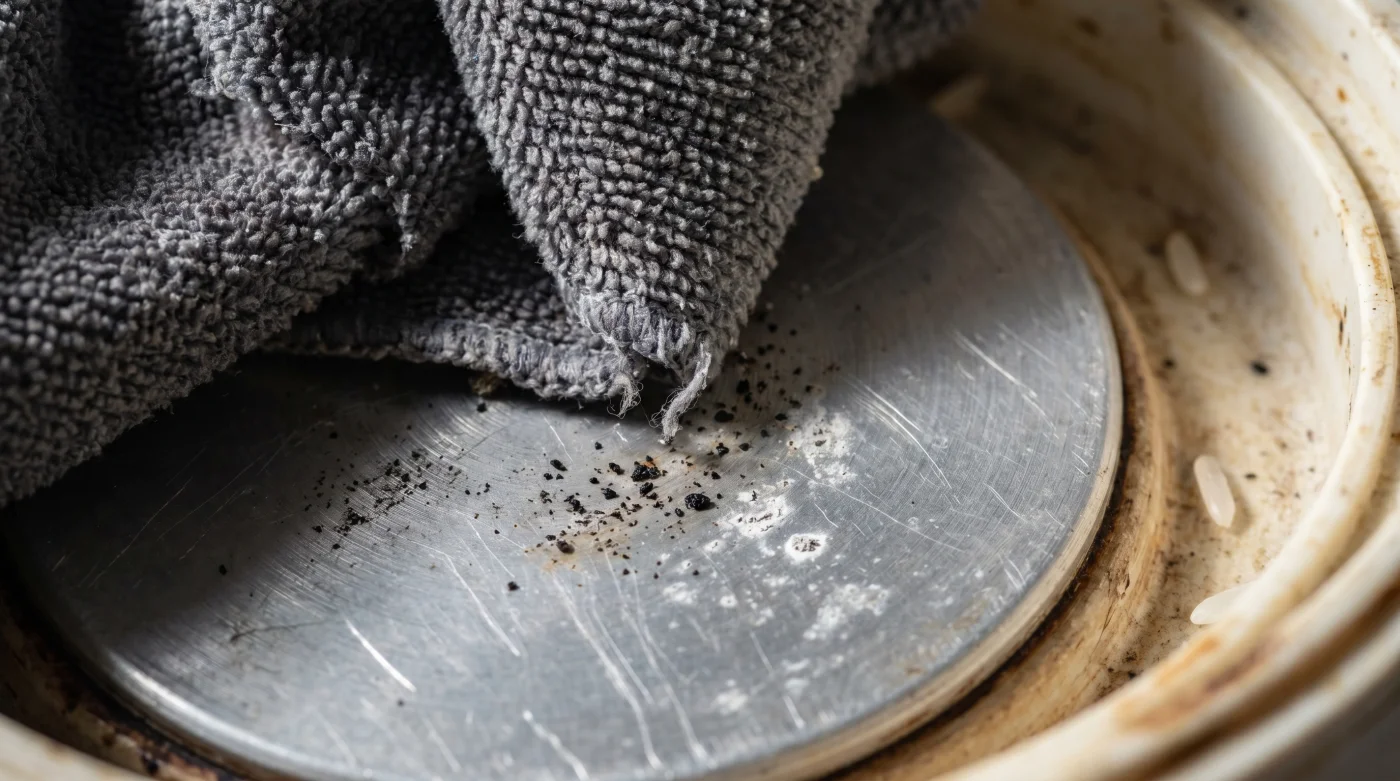
But the reality is that your machine relies on microscopic thermal precision. A single drop of water or a speck of dried starch resting on the central heating plate acts as an erratic insulator, confusing the internal thermostat and baking the bottom layer of your dinner into a hard, stubborn cement.
The Illusion of the Passive Appliance
Think of the central heating plate as the highly sensitive fingertips of a safecracker. It reads the temperature of the inner pot to know the exact millisecond the water has been absorbed, signaling the shift from an active boil to a gentle warming phase.
When you slap a damp, freshly washed inner pot onto that spring-loaded sensor, you are essentially forcing it to wear gloves. The heating element has to aggressively burn through that exterior moisture before it can accurately read the temperature of the rice inside.
The mundane detail we typically ignore—the ribbed metal plate hidden under the pot—is the actual control center. When we blindly trust the set-and-forget myth, we neglect the one physical connection that dictates the entire process and protects our food.
Kenjiro Sato, a 58-year-old appliance repair technician in Seattle, spends his days inspecting high-end induction and micom models. He notes that ninety percent of the machines brought to his shop for running too hot are not broken at all. People scrub the non-stick interior obsessively, but they let the aluminum heating plate turn black with carbonized starch. He keeps a drawer full of dry microfiber cloths in his shop, showing customers that wiping the plate and the bottom of the pot is the cheapest, most effective recalibration available.
Adjusting for Your Daily Rhythm
Not everyone interacts with their kitchen the same way, but the physical laws of thermal conductivity remain constant. Whether you are rushing through dinner prep or carefully batch-cooking for the week, this simple reset adapts to your flow.
For the busy parent throwing dinner together between soccer practices, the instinct is to wash the rice directly in the cooking pot and immediately drop it into the machine. Taking three seconds to wipe the exterior completely dry with a microfiber towel eliminates the erratic insulation that causes the bottom layer to burn.
- Warriors Suns Broadcast Networks Unexpectedly Suspend Global Digital Streams
- Merca Panama Officials Abruptly Alter Weekend Wholesale Purchase Requirements
- Microwave Magnetrons Heat Food Perfectly When Placing Plates Off Center
- Smart TV Remotes Double Navigation Speed Removing This Internal Spring
- Dishwasher Filters Clean Themselves Completely With One Lemon Wedge
- Fixed Rate Mortgages Contain A Secret Early Repayment Penalty Clause
- Synthetic Brake Fluid Quietly Deteriorates Your Older Rubber Brake Lines
- Vitamin C Serums Actively Destroy Collagen Under Artificial Office Lights
- iPhone Storage Settings Hide A Massive Background Tracking Drain
- Cast Iron Skillets Actually Rust Faster With Standard Vegetable Oil
For the culinary purist who meticulously rinses short-grain rice until the water runs clear, the risk of scorching is actually higher. Purists tend to let the rice soak in the inner pot for thirty minutes before cooking, giving condensation ample time to form on the exterior metal.
Lifting the pot to wipe away that invisible condensation before hitting start provides the mechanical sensor with an even, predictable heat distribution.
For the vintage machine owner using an older, basic model without a microcomputer, this trick is even more vital. Traditional cookers rely entirely on a simple magnetic thermostat trigger that trips when the temperature exceeds 212 degrees Fahrenheit.
Any residual water or old starch on the heating plate delays that trigger. By ensuring bone-dry, metal-to-metal contact, you protect the mechanical sensor and guarantee exact thermal timing.
The Microfiber Reset Routine
Correcting this flaw does not require specialized chemicals or intense scrubbing. It requires tactile awareness before you ever plug the machine into the wall.
Implementing this routine takes mere seconds, but it protects your machine’s longevity.
- Inspect the element: Look closely at the silver heating plate and the small center spring. Remove any stray grains or hardened starch.
- The dry wipe: Use a clean, dry microfiber cloth to buff the heating plate. Microfiber is crucial here because it grabs grease and starch without leaving behind tiny cotton fibers.
- The pot base: After washing your rice, wipe the entire bottom and lower curves of the inner pot until no moisture remains.
- The drop and spin: Place the pot into the cooker and give it a slight quarter-turn. This gentle friction guarantees a tight connection.
Tactical Toolkit: Keep a dedicated 8×8 inch microfiber cloth draped over the handle of your machine. Never use it for wet spills; its sole purpose is maintaining the dry connection between pot and plate.
It is a small habit that fundamentally shifts how you interact with an automated tool. You stop treating it as a magic box and start respecting the thermal exchange.
Reclaiming Your Kitchen Confidence
Finding peace of mind in the kitchen comes from understanding your tools, not just following their instruction manuals. The manual tells you what buttons to press, but understanding the mechanics tells you how to guarantee a perfect outcome.
By taking those three seconds to wipe the heating element, you strip away the anxiety of ruined meals and wasted food. You transform a frustrating gamble into a flawless bowl every time.
A machine can only be as accurate as the physical information it receives; keep the contact points perfectly dry, and the thermostat will do the math for you.
| Key Point | Detail | Added Value for the Reader |
|---|---|---|
| The Damp Drop | Placing a wet pot directly onto the heating plate. | Causes erratic sensor readings and scorched bottoms. |
| The Microfiber Wipe | Buffing the plate and pot base dry before cooking. | Ensures perfect thermal conductivity and fluffy grains. |
| The Quarter-Turn | Spinning the pot slightly after dropping it in. | Locks the pot against the sensor for an exact temperature read. |
Frequently Asked Questions
Can I use a paper towel instead of microfiber? Paper towels often leave behind tiny fibers that can scorch onto the heating plate; microfiber grabs moisture without leaving residue.
How do I clean a plate that is already burnt? Unplug the machine, let it cool completely, and use a lightly damp melamine sponge to gently lift the carbon, then dry thoroughly.
Does this apply to high-end induction cookers? Yes. While induction uses magnetic fields rather than direct thermal transfer, moisture and debris still interfere with the precise temperature sensors.
Why did my cooker suddenly start burning rice after years of working well? Starch and carbon build up invisibly over time, acting as a thick layer of insulation that forces the machine to overheat.
Should I oil the bottom of the pot? Never. The goal is bone-dry, metal-to-metal contact to allow the internal thermostat to read the exact heat of the water inside.