The bathroom mirror is slightly fogged from the hot shower. You unscrew the dropper of your evening serum, the familiar ritual offering a quiet transition from the chaos of the day to the calm of the night. The fluorescent lights hum softly above as you reach for the products lined up on your vanity, preparing to wash the day away and repair the damage.
You smooth on a thick layer of your daily moisturizer first. It feels like a safety net, a plush cushion designed to protect your face from the harsh sting of cellular turnover. You wait a few moments, feeling the cold, slick surface of the cream, and then you press the active drops gently over the top.
The standard advice has been repeated for years by magazines and beauty counters alike. Buffer your strong actives. Sandwich them between heavy creams to slow down the irritation, they say. It is treated as gospel, a non-negotiable step for anyone trying to maintain a healthy glow without enduring weeks of peeling.
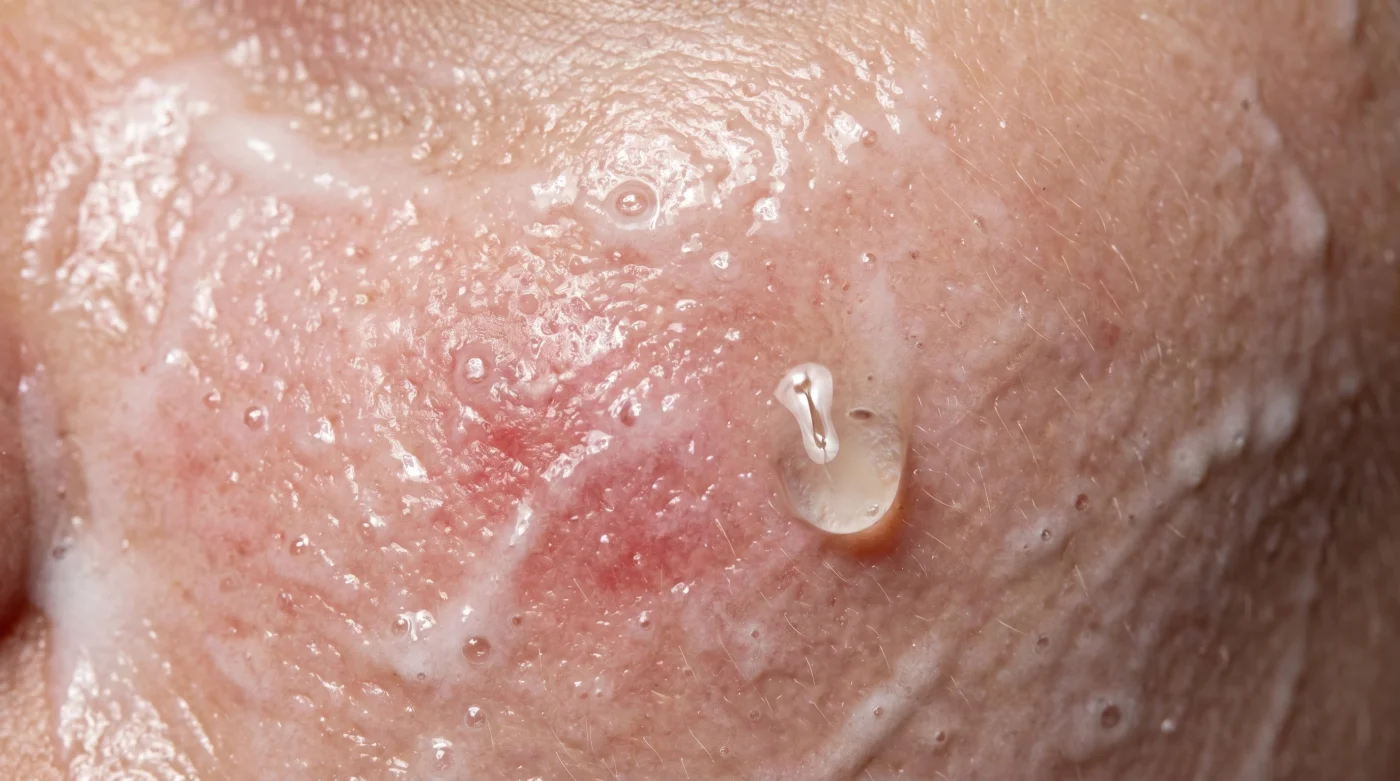
But right around 2 AM, your face starts to itch. A quiet, persistent heat builds along your jawline and cheeks, dragging you out of sleep. You wake up not to a restored complexion, but to angry redness, tight patches, and a compromised face that feels raw to the touch.
The Greenhouse Effect on Your Face
The industry standard of buffering is fundamentally flawed. We have treated our faces like we are painting a living room wall—operating under the assumption that a thick coat of primer makes the topcoat go on smoother and safer. We believe the barrier cream acts as a shield, diluting the harshness of the chemical.
Instead, think of your nighttime routine like pitching a plastic tarp over damp soil. Trapping moisture underneath active ingredients acts precisely like a botanical greenhouse on a sweltering July afternoon in Pennsylvania. The environment underneath the surface does not cool down; it rapidly heats up, creating a hyper-accelerated ecosystem.
When you apply a retinol serum over a traditional daily moisturizer, you are mixing a potent, unstable chemical with a water-heavy base and sealing it all in. Daily lotions are packed with humectants—ingredients designed to draw and hold water. They are not inert shields.
The trapped water acts as an aggressive conductor. It forces the chemical reaction to happen far too quickly, driving the active compounds directly through your fragile lipid layer like a bulldozer. You aren’t protecting your face at all. You are suffocating it, leaving your delicate cellular structure breathing through a pillow as the active ingredients rapidly break down your natural defenses.
Dr. Elias Vance, a 54-year-old cosmetic formulator running an independent lab outside of Philadelphia, spent three years tracking this exact phenomenon. He noticed an alarming spike in severe dermatitis among clients who strictly adhered to the “sandwich method.” By measuring absorption rates in a controlled lab setting, he proved that standard water-based moisturizers don’t dilute the active ingredient. Instead, the trapped water creates a high-speed slip-and-slide, causing the serum to strip the natural oils of the face within minutes rather than slowly releasing over a span of eight hours.
This revelation completely changes the evening wash. It demands a total reset of how you approach your vanity mirror before bed, shifting the goal from layering products to respecting the raw mechanics of your biology.
- Bluetooth Headphones Drain Your Phone Battery Through Background Proximity Polling
- Electric Vehicle Tires Degrade Faster Using Maximum Regenerative Braking Settings
- Air Fryers Ruin Frozen Vegetables Without This Preheating Mist Hack
- Colorado Inter Miami Stadium Security Quietly Bans Specific Smartphone Cases
- Chelsea Manchester United Ticketing Portals Quietly Cancel International Digital Passes
- Wi-Fi Range Extenders Secretly Halve Your Overall Internet Speeds
- Front Load Washing Machines Grow Mold From Liquid Detergents
- Carnauba Car Wax Traps Microscopic Paint Scratches Under Direct Sun
- Memory Foam Mattresses Degrade Rapidly When Using Heated Blankets
- Stainless Steel Pans Become Nonstick With This Water Drop Trick
Adjustment Layers for Your Routine
Not all skin handles the shift away from buffering the same way. You cannot blindly follow a new set of instructions; you have to read the room of your own physical state and adjust accordingly.
For the Purist: You wash, you wait, and you apply. No toners, no essences, no mists. Just clean, completely dry skin that has been given a full twenty minutes to normalize before the active drop ever touches your forehead.
For the Sensitive Type: The thought of raw application might make you flinch, especially if you have a history of reactivity. Instead of your daily water-based lotion, you use a single drop of a pure lipid, like squalane oil, pressed gently only into the sensitive corners of your nose and mouth to prevent pooling.
For the Climate Fighter: When the mid-Atlantic winter drops below freezing, the dry air violently pulls water from your face. You skip the active serum entirely on the nights the heater runs the hardest, recognizing that your body needs repair, not hyper-accelerated turnover, during a deep freeze.
The Bare-Skin Calibration
Transitioning to direct application requires genuine patience. It forces you to abandon the rushed, five-minute bedtime routine where products are slapped on one after the other in a wet hurry.
You need to establish a strict waiting period. Moisture is the true enemy of a slow, steady, and safe cellular turnover process.
Wash your face with lukewarm water, pat it down gently with a clean cotton towel, and walk away. Go brush your teeth, lay out your clothes for the next morning, or sit on the edge of the bed and read a few pages of a book.
Wait a minimum of fifteen minutes by the clock. Your skin should feel completely normalized to the room temperature, tight but undisturbed, before you proceed.
- Dispense a single, pea-sized amount onto your index finger.
- Dot it lightly on your forehead, cheeks, and chin to ensure even distribution.
- Spread it with quick, outward strokes, entirely avoiding the immediate eye area and the creases of the nostrils.
- Do not immediately follow with any heavy cream; let the formula settle into the tissue for at least ten minutes.
Your tactical toolkit is incredibly simple. You need a gentle, non-foaming cleanser that leaves no residue. You need a reliable timer set for fifteen minutes. And you need the room temperature to be ideally sitting around 68 to 72 degrees Fahrenheit to prevent residual sweating.
Only after the waiting period should you consider pressing a completely dry, ceramide-rich ointment over the top. Never reach for a standard daytime lotion, as introducing water back into the environment will instantly reignite the greenhouse effect.
Beyond the Chemistry
There is a profound quiet that comes with simplifying the things we do to take care of ourselves. Breaking away from the endless, frantic layering of skincare removes the quiet anxiety of doing it all wrong.
You stop fighting your own biology. You let the skin function exactly as it was designed, trusting its natural barrier rather than constantly trying to engineer a synthetic one with a dozen different bottles.
Letting go of the buffering myth means fewer products, fewer complicated steps, and an absolute end to the mysterious morning redness. It brings a lasting sense of calm and competence to the final, quiet moments of your day.
The healthiest skin belongs to those who understand that active ingredients require an empty stage, not a crowded theater.
| Key Point | Detail | Added Value for the Reader |
|---|---|---|
| The Water Trap | Daily lotions contain high levels of water and humectants. | Prevents you from accidentally boiling your active ingredients into your lipid layer. |
| The Wait Time | A mandatory 15-minute pause after washing. | Ensures complete evaporation, stopping the “slip-and-slide” absorption effect. |
| Pure Lipid Alternatives | Using single-ingredient oils (like squalane) for sensitive areas. | Protects delicate creases without introducing reactive water to the environment. |
Frequently Asked Questions
Does this mean I throw away my daily moisturizer? No, reserve it exclusively for the morning when your face needs hydration to face the elements, not chemical turnover.
What if my skin feels intolerably tight while waiting 15 minutes? That tightness is your natural state post-cleanse; if it burns, your cleanser is too stripping, not the lack of immediate moisture.
Can I use a facial mist before the active serum? Absolutely not. Introducing atomized water is the fastest way to trigger the greenhouse effect and guarantee a chemical burn.
How many nights a week should I do this dry application? Start with two nights a week spaced far apart, listening closely to how your face responds the following afternoon.
What should I apply if I wake up peeling? Stop all active serums immediately, wash with water only, and apply a thick, dry ceramide paste until the tissue fully heals.