The frost bites hard against the bedroom window on a mid-January morning in Pennsylvania. The furnace kicks on with a low rumble, pushing a steady stream of dry, synthetic warmth through the floor vents to chase away the heavy chill. You stand at the bathroom sink in the quiet early hours, pressing a full glass dropper of your favorite viscous, clear serum into your palms. You trust this thick liquid implicitly, expecting it to plump your skin and protect your face against the harsh, freezing elements waiting outside your front door.
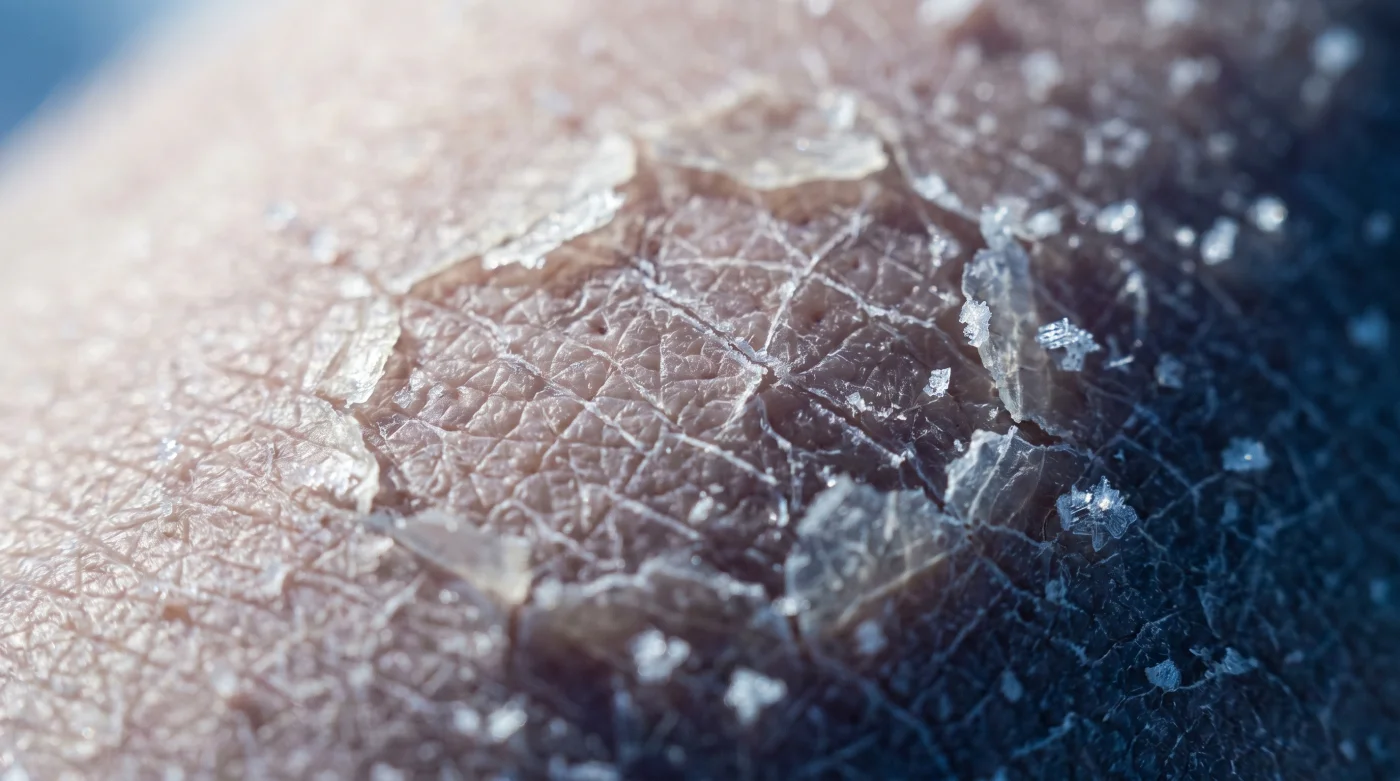
Yet by lunchtime, something feels profoundly wrong. Your cheeks carry a familiar, uncomfortable tightness, reminiscent of paper stretched over wood. Despite layering on a product celebrated universally by the industry as an absolute moisturizing miracle, your complexion looks dull and feels rough to the cautious touch under the glaring office lights.
The beauty sector sells a very convincing, repetitive narrative. You are taught to rely heavily on this singular ingredient, trusting it to hold a thousand times its weight in water, treating it like an invisible, impenetrable shield against the season. But the physical reality of winter climate conditions creates a hostile environment that quickly turns this beloved daily ritual into a subtle act of self-sabotage.
When ambient indoor humidity drops to punishing, single-digit levels, the established rules of chemistry shift dramatically beneath your fingers. That exact same bottle you trust during thick, humid summer afternoons suddenly pulls moisture entirely backward, siphoning the last remaining hydration out of your deepest dermal layers and surrendering it to the sterile air.
The Desert Sponge Dilemma
To understand this flaw in the accepted standard, you have to stop viewing your morning routine as magic and start viewing it as a mechanical system. Imagine a highly absorbent kitchen sponge resting on a dry granite countertop. If the air in the room is entirely parched, the sponge does not magically generate water out of thin air; it simply dries into a stiff, rigid block, entirely useless for its intended purpose.
Hyaluronic acid operates on the exact same structural principle. It is a humectant by definition, meaning its singular, obsessive job is to seek out available water. When the air around you drops below thirty percent humidity—a common occurrence when the radiators are running full blast—the environment contains almost no free water to offer.
Denied moisture from the surrounding atmosphere, the ingredient becomes desperate. It turns its attention inward, reaching down past the surface level and into the deeper, water-rich dermis of your own skin. It actively pulls that vital, foundational hydration up to the topmost layer, where the dry winter air immediately steals it away through rapid evaporation.
You are ultimately left with a compromised barrier and accelerated transepidermal water loss. The very product you purchased to cure your seasonal flakiness is acting exactly like a relentless vacuum, pumping your internal reserves directly into the heater vents of your living room.
Clara, a forty-two-year-old clinical esthetician running a quiet studio in Philadelphia, sees this specific phenomenon every single February. ‘My clients sit in my chair with red, reactive faces, clutching expensive bottles they swear by,’ she notes, carefully evaluating their damaged barriers under a magnifying lamp. She spends the entire colder half of the year weaning them off the ingredient, replacing their routine with rich ceramides, squalane, and oat lipids. Her advice to them is always grounded in the physical reality of the season: applying an isolated humectant in a heated, dry room is exactly like drinking salt water when your throat is already terribly parched.
- Air Fryer Baskets Clean Themselves Using This Simple Water Hack
- Mortgage Contracts Hide A Secret Clause Waiving Private Insurance Fees
- Lithium Ion Batteries Degrade Faster When Left Fully Charged Overnight
- Stainless Steel Pans Become Completely Nonstick With This Water Trick
- Ceramic Brake Pads Actually Increase Stopping Distance On Cold Mornings
- Retinol Serum Application Fails When Mixed With Standard Tap Water
- Medcom Go Streaming Servers Suddenly Throttle Free Background Data Usage
- Europa League Smart TV Apps Abruptly Drop Older Operating Systems
- Dishwasher Filter Cleaning Takes Three Seconds Using White Vinegar Ice
- Air Fryer Basket Airflow Doubles When You Remove This Rubber Stop
Adjustment Layers for the Frostbitten
Moving away from a flawed, widely accepted standard requires a bit of nuance. Your local environment heavily dictates what your body physically needs, and adjusting your bathroom habits means paying close, daily attention to how your specific complexion reacts to the changing atmospheric pressure.
For the strict barrier purist, the most immediate and effective solution is often a complete winter hiatus. You confidently pack away the humectant-heavy serums in a dark drawer until the spring thaws finally arrive. Instead, you opt for thick, lipid-rich creams that physically trap your existing natural moisture inside the skin where it rightfully belongs, breathing through a pillow of nourishment rather than actively pulling from the air.
For the stubborn devotee who absolutely refuses to let go of their favorite clear serum, the strategy drastically shifts to immediate damage control. If you feel compelled to use it, you must fundamentally change the rules of engagement, intentionally outsmarting the dry climate by altering how the product interacts with the surface tension.
For the inherently oily but currently dehydrated complexion, this seasonal transition often feels uniquely tricky. You might rely heavily on watery humectants to avoid heavy breakouts, but you still urgently need a lightweight occlusive sealing layer. Swapping heavy butters for a few drops of pure jojoba oil provides just enough of a roof to prevent that rapid evaporation from wreaking havoc on your pore structure without feeling greasy.
The Mindful Climate Regimen
Fixing this physical frustration demands a highly deliberate, minimalist approach to your morning and evening applications. You are no longer mindlessly slathering on products; you are actively managing a delicate microclimate right on the surface of your face.
The exact timing of your application completely dictates the success of the entire routine. You have a shrinking window of mere seconds before the aggressive, dry room air begins to win the physical battle against your skin.
- Wash your face gently using a non-stripping, milk-based cleanser and tepid water.
- Leave your skin absolutely dripping wet at the sink; explicitly do not reach for the cotton towel.
- Press the serum directly into the sitting water droplets, giving the humectant an immediate, rich source to drink from.
- Within three to five seconds, massage a heavier moisturizer directly over the top to lock the physical doors.
This deliberate sequence creates a highly effective artificial barrier. The humectant drinks the surface water you provided, and the heavy cream prevents the desperately dry room from ever stealing it back.
Consider thoughtfully building a winter-specific tactical toolkit. Keep a simple cool-mist humidifier running constantly in your bedroom while you sleep to artificially raise the ambient humidity above forty percent, allowing your carefully chosen products to function exactly the way they were initially formulated to work.
Listening to the Barometer
Rethinking a deeply trusted routine is rarely a comfortable process, especially when every glossy advertisement insists you are making a grave mistake by stepping away from a famous ingredient. But learning to intentionally work with your harsh environment, rather than stubbornly fighting it blindly, brings a profound sense of physical relief to your daily rituals.
You no longer have to stand at the mirror and wonder why your diligent efforts yield dry results. You now possess a clear understanding of the mechanical forces at play, giving you the quiet power to adapt intuitively the moment the late autumn wind turns bitter and the indoor heating roars to life.
True skin health is nothing more than a quiet, continuous dialogue with the physical world around you. By observing the thick frost accumulating on the glass and adjusting your morning habits accordingly, you actively protect your daily comfort, your personal confidence, and the quiet resilience of your own face.
Real skincare is learning to stop punishing your face for the crimes of the weather.
| Key Point | Detail | Added Value for the Reader |
|---|---|---|
| Humectant Mechanics | Draws water from the nearest abundant source based on atmospheric density. | Helps you clearly visualize why the ingredient completely fails in parched rooms. |
| Transepidermal Water Loss | The rapid evaporation of internal hydration pulled to the skin barrier. | Explains the sudden, uncomfortable tightness you feel by mid-afternoon. |
| The Occlusive Seal | Applying a heavy lipid layer immediately over damp skin. | Provides a foolproof, tactile method to stop the damage instantly. |
Frequently Asked Questions
Does this mean I should throw my serum away? Absolutely not. Simply store it in a cool, dark place until the humidity naturally returns in the spring.
Can I just mix the serum into my heavy cream? While mixing saves time, applying the serum to wet skin first, then sealing it with the cream, creates a much stronger protective barrier.
What ingredients should I look for instead right now? Focus heavily on ceramides, glycerin, squalane, and shea butter to physically protect against the harsh air.
Will a desktop humidifier at work actually help? Yes. Running a small humidifier directly near your face alters the immediate microclimate enough to stop the ingredient from pulling internal moisture.
How do I know if my skin is dehydrated or naturally dry? Dry skin fundamentally lacks natural oil production; dehydrated skin lacks water and often feels tight while still producing midday shine.